
• Oleg Atbashian is a Ukranian artist who worked as a propaganda artist for Communists in the Soviet Union. He moved in 1994 in the US, where he saw the delusional affection for Left and socialism of the most American intellectuals.  He saw the worst of both worlds and lived to tell the tale in his book Shakedown Socialism: Unions, Pitchforks, Collective Greed, The Fallacy of Economic Equality, and other Optical Illusions of “Redistributive Justice, Greenleaf Press, 2010. I’ve found very amusing some thoughts that might be helpful in understanding some socialist fallacies .
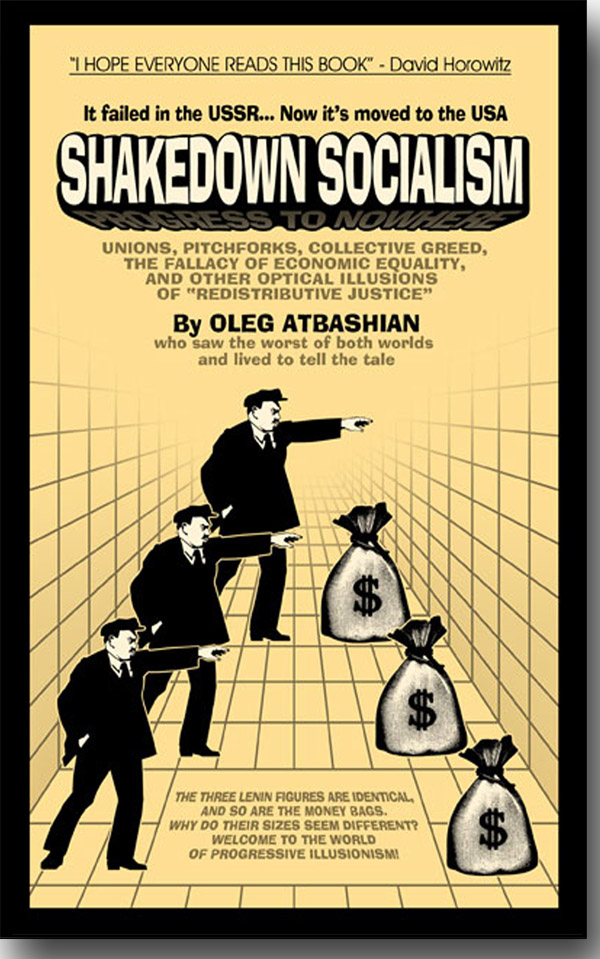
    ShakedownSocialism cover web

    The six dialectical contradictions of socialism in the USSR:

    • There is full employment — yet no one is working.
    • No one is working — yet the factory quotas are fulfilled.
    • The factory quotas are fulfilled — yet the stores have nothing to sell.
    • The stores have nothing to sell — yet people got all the stuff at home.
    • People got all the stuff at home — yet everyone is complaining.
    • Everyone is complaining — yet the voting is always unanimous.

    American version of old Soviet “6 contradictions”:

    • America is capitalist and greedy — yet half of the population is subsidized.
    • Half of the population is subsidized — yet they think they are victims.
    • They think they are victims — yet their representatives run the government.
    • Their representatives run the government — yet the poor keep getting poorer.
    • The poor keep getting poorer — yet they have things that people in other countries only dream about.
    • They have things that people in other countries only dream about — yet they want America to be more like those other countries.

    Hollywood clichés:

    • Without capitalism there’d be no Hollywood — yet filmmakers hate capitalism.
    • Filmmakers hate capitalism — yet they sue for unauthorized copying of their movies.
    • They sue for unauthorized copying — yet on screen they teach us to share.
    • On screen they teach us to share — yet they keep their millions to themselves.
    • They keep their millions to themselves — yet they revel in stories of American misery and depravity.
    • They revel in stories of American misery and depravity — yet they blame the resulting anti-American sentiment on conservatism.
    • They blame the anti-American sentiment on conservatism — yet conservatism ensures the continuation of a system that makes Hollywood possible.

    People’s power:

    • Liberals believe they’re advancing people’s power — yet they don’t believe people can do anything right without their guidance.
    • People can’t do anything right — yet the government bureaucracy can do everything.
    • The government bureaucracy can do everything — yet liberals don’t like it when the government takes control of their lives.
    • Liberals don’t like it when the government takes control of their lives — yet they vote for programs that increase people’s dependency on the government.
    • They vote for programs that increase people’s dependency on the government — yet they believe they’re advancing people’s power.

    Bush and the media:

    • The media said Bush was dumb — yet he won over two intelligent Democrats.
    • He won over two intelligent Democrats — yet the media said his ratings were hopeless.
    • The media said his ratings were hopeless — yet the 2004 electoral map was red.
    • The 2004 electoral map was red — yet the media said his policies failed.
    • The media said his policies failed — yet the economy grew and the war was won.
    • The economy grew and the war was won — yet the media said we needed “change.”

    Public education:

    • Liberals have been in charge of education for 50 years — yet education is out of control.
    • Education is out of control — yet liberal teaching methods prevail.
    • Liberal teaching methods prevail — yet public schools are failing.
    • Public schools are failing — yet their funding keeps growing.
    • Their funding keeps growing — yet public schools are always underfunded.
    • Public schools are always underfunded — yet private schools yield better results for less.
    • Private schools yield better results for less — yet public education is the only way out of the crisis. (reference: Old Soviet-era jokes have become disturbingly applicable to the U.S.)
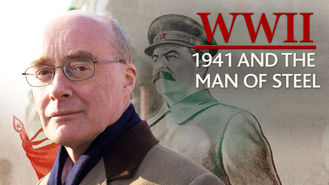
  • Un om ros de paranoia dar și paralizat de frică, în pragul colapsului psihic, un cinic care-și hrănea egoul devorând moral, psihologic, emoțional și fizic pe cei care-l înconjurau – iată doar câteva crâmpee din universul monstruos al unui Stalin confruntat cu invazia germană în vara anului 1941.

    man of steel

    În ”WWII. 1941 and the Man of Steel” (2011) BBC și istoricul David Reynolds (University of Cambridge) ne deschid o fereastră către unul dintre cei mai brutali  criminali (”progresiști”) ai istoriei din secolul trecut.

    PS. În fața declinului vizibil al armatei și al eșecurilor militare cauzate (și) de cenzura ideologică, Stalin decide pentru o scurtă perioadă de timp să suspende sufocantul control al apparatchik-ului comunist/de partid asupra ofițerilor/generalilor  și decide că este nevoie de o alianță pragmatică cu dușmanul de clasă/ideologic, imperialismul britanic și cel amercian. Exact aceste două compromisuri de la linia ideologică vor fi și cele care vor schimba cursul evenimentelor pentru Stalin în WWII.

  • National Geographic, June 7, 2016:

    Dan Leş is a soulful ceramicist. His work brings out stories and legends from clay, and he adds a traditional Romanian spirit to his pottery. As part of filmmaker Matei Pleşa‘s personal project “Fascination of the Craft,” this short meets Leş in his workshop … where mud comes to life.

    037

  • Pe plaiurile minunate ale patriei electronice am cules azi o floricică pe cât de atrăgătoare, pe atât de urât mirositoare.

    Michael Sowa (10)

    Invitation by Michael Sowa

    A scientist will read dozens of books in his lifetime, but still believe that he has a lot more to learn.

    A religious person barely reads one book, and think that they know it all.

    Cool nu? Uite așa jongleria sloganelor amețește spiritele mai slăbuțe și ochii cu lentile prea colorate să mai vadă și dincolo de ele!

    Memele sunt aforismele de altădată puse în hainele luptei/neliniștii hipermoderne, sunt expresii recente cu pretenții de înțelepciune instant, este lumina clară dar unicoloră a unghiului convenabil, fundatura care promite orizonturi profunde pictate pe pereții certitudinii. Memele sunt un fel de fast-thinking la drive-thru-ul social-media, prăjiturele filosofice cu care să se împopoțoneze cei care sunt prea obosiți cu căutările cool-ului ca să lectureze contexte, nu doar idei “raw”. Memele prezintă un risc teribil de dezcontextualizare, unilateralism, rezolvare generoasă a problemelor umanității prin încarcerarea diferiților în plasa disprețului și a erorilor indubitabile. Nu faci un mare bine ca odată prinsă o umbră de adevăr să tragi obloanele și să strigi în gura mare la întunericul celorlalți! În economia relației cu celălalt memele sunt o risipă teribilă de neastâmpărate reproșuri ce își pierd astfel doza de medicament pentru a se acumula într-o rezervă de otravă și dispreț.

    Disprețul altruist, ignoranța cu/din citate, certitudinea modestă și interogația cu vocea blocată de propria suficiență sunt doar câteva dintre elementele stimulate de o cultură a citatelor ca armă la purtător.

    Revenind la memele menționat, nu cred că pot acuza oamenii de știință că sunt fanatici și aroganți ca un popularizator al științei gen Dawkins, de exemplu, la fel cum nu pot spune că creștinii, de exemplu, chiar au conștiința suficienței propriei cunoașteri a tot ce este, uitându-ne la “prea-evlavioși” guralivi gen Becali. Mă tem că un simt al realității, deci și un bun simț elementar, ne spune că pericolul închiderii în propria atot-suficiență este real pentru oricine, inclusiv/mai ales pentru cei ce au “epuizat” certitudinea prin crearea și publicarea unor astfel de meme (care simplifică și răstoarnă propagandistic/ideologic realitatea prin hiperbolizare a convenientului și omitere a falsificabilului, uitând astfel că există și oameni de știință care își declară suficiența propriei viziuni, aroganță deconstruită mai târziu de noi descoperiri și re-scrieri, la fel cum și mulți creștini sunt buni lectori nu numai ai Bibliei ci și a bibliotecilor de științe de tot felul și care sunt modele de oameni deschiși spre cunoaștere, păstrând totodată decența modestiei creștine).

    Eu aș avea probleme atât cu persoana religioasă care citește doar o singură carte, și nici pe aia nu prea mult sau stâlcit (cu cât mai mult cu cât acea carte chiar recomandă și lectura celorlalte ca parte integrantă a cunoașterii Celui ce a scris narativul universului în care trăim), la fel cum m-aș mira de “spiritul deschis” al unui om de știință care este ignorant în lecturarea unei cărți care nu-i convine sau nu îi împlinește propriile proiecții mentale, de prea multe ori împrumutate pe gratis doar ca să fie acceptat în comunitatea științifică.

    PS. Interesant mi se pare faptul ca mulți creștini “progresiști” neagă tocmai orice formă de relevanță a acelei cărți în organizarea fabricii de sens (metacogniție, meta/interdisciplinaritate, numiți-o cum vreți) care prelucrează datele obținute de diferitele științe. Adica moftangii-s leneși și pretentioși dar laodică revoluționari cu gura mare!

    Antidotul pentru o astfel de obturare grosolană și violentă a dialogului dintre lectura științei și cea a religiei? Puțin mai mult efort, timp și înțelepțiune de a nu transforma contorul cunoștințelor în obtuzități gălăgioase, indiferent unde s-ar afla ele. Iată dar un exemplu de ieșire din supra-simplificarea părtinitoare a memelui menționat mai sus:

  • Political Idolatry

    The political value of the doctrine of original sin lies in its recognition that our evil tendencies are not in the nature of a problem that we can rationally comprehend and deliberately solve. To say that the source of sin is sin is to say that sin is underivable and inexplicable. A sinful society is not like a malfunctioning machine, something to be checked and quickly repaired.

    Sin is ironic. Its intention is self-exaltation, its result is self debasement. In trying to ascend, we fall. The reason for this is not hard to understand. We are exalted by God; in declaring our independence from God, we cast ourselves down. In other words, sin concerns not just our actions and our nature but also the setting of our lives. By sin we cast ourselves into a degraded sphere of existence, a sphere Christians often call “the world.” Human beings belong to the world through sin. They look at one another as objects; they manipulate, mutilate, and kill one another. In diverse ways, some subtle and some shocking, some relatively innocuous and some devastating, they continually depersonalize themselves and others. They behave as inhabitants of the world they have sinfully formed rather than of the earth created by God. Original sin is the quiet determination, deep in everyone, to stay inside the world. Every sinful act is a violation of the personal being that continually, in freedom, vision, and love, threatens the world. The archetype of sin is the reduction of a person to the thing we call a corpse.

    WHEN the paradox of simultaneous exaltation and fallenness collapses, it is replaced by either cynicism or (to use a term that is accurate but masks the destructive character of the attitude it refers to) idealism.

    Cynicism measures the value of human beings by their manifest qualities and thus esteems them very slightly. It concludes, in effect, that individuals are not exalted, because they are fallen. Idealism refuses this conclusion. It insists that the value of human beings, or of some of them, is very great. It is not so simplistic, however, as to deny the incongruity of their essential value and their manifest qualities. Rather, it asserts that this incongruity can be resolved by human beings on their own, perhaps through political revolution or psychotherapy. Human beings can exalt themselves.

    We shall dwell in this discussion on idealism, partly because idealism is much more tempting and therefore much more common than cynicism. Idealism is exhilarating, whereas cynicism, as anything more than a youthful experiment, is grim and discouraging. We shall dwell on idealism also because it is so much more dangerous than it looks. The dangers of cynicism are evident; that a general contempt for human beings is apt to be socially and politically destructive scarcely needs to be argued. But idealism looks benign. It is important to understand why its appearance is misleading.

    Idealism in our time is commonly a form of collective pride.Human beings exalt themselves by exalting a group. Each one of course exalts the singular and separate self in some manner. In most people, however, personal pride needs reinforcement through a common ideal or emotion, such as nationalism. Hence the rise of collective pride. To exalt ourselves, we exalt a nation, a class, or even the whole of humanity in some particular manifestation like science. Such pride is alluring. It assumes grandiose and enthralling proportions yet it seems selfless, because not one person alone but a class or nation or some other collectivity is exalted. It can be at once more extreme and less offensive than personal pride.

    To represent the uncompromising and worldly character of modern idealism we may appropriately use the image of the man-god. This image is a reversal of the Christian concept of the God-man, Christ. The order of the terms obviously is crucial. In the case of the God-man, it indicates the source of Christ’s divinity as understood in Christian faith. God took the initiative. To reverse the order of the terms and affirm the man-god is to say that human beings become divine on their own initiative. Here pride reaches its most extreme development. The dignity bestowed on human beings by God, in Christian faith, is now claimed as a quality that human beings can acquire through their own self-creating acts.

    In using the concept of the man-god, I do not mean to suggest that divinity is explicitly attributed to certain human beings. Even propagandists, to say nothing of philosophers, are more subtle than that. What happens is simply that qualities traditionally attributed to God are shifted to a human group or type. The qualities thus assigned are various–perfect understanding, perhaps, or unfailing fairness.

    […]

    Being good politically means not only valuing the things that are truly valuable but also having the strength to defend those things when they are everywhere being attacked and abandoned. Such strength is exemplified by Dietrich Bonhoeffer, the great German pastor and theologian, who uncompromisingly opposed the Nazi regime from the beginning, even to the extent of returning to Germany from a guaranteed haven in America to join the anti-Hitler resistance. Arrested by the Gestapo, he was killed at the end of the war. One of Bonhoeffer’s prayers, composed in prison, was, “Give me the hope that will deliver me from fear and faintheartedness.” Much that I have tried to say in the preceding pages might be summarized simply in this question: If we turn away from transcendence, from God, what will deliver us from a politically fatal fear and faintheartedness? (Glenn Tinder, Can We Be Good Without God? On the political meaning of Christianity, The Atlantic, December 1989, included in Glenn Tinder  Can We Be Good Without God?, Regent College Publishing, 2007, emphasis are mine)

    political idolatry

    The doctrine of fall disallows political presumptions rather than any particular historical hopes. It is presumption when people deny or ignore the evil in human nature and assume assume that everything we assiduously strive  for in history can unquestionable be gained. Christians may properly play the role of political skeptics. When the hearts of human beings are lifted up by confidence in their plans and calculable prospects, it is proper for Christians to call attention to human failings and to the historical limitations they may entail. Christians should be a sobering presence in the political world. Reinhold Niebuhr sets an admirable example. The symbol of original sin was used by Niebuhr to temper the potentially  naïveté and pride of political man. (Glenn Tinder, The Political Meaning of Christianity: An Interpretation, Wipf & Stock Pub, 2000, p. 164, emphasis are mine)