
Skip to content
Alonewithothers's Blog

Alonewithothers's Blog

Smile, without a reason why. Love, as if you were a child.

  • Home
  • About
  • Research Projects

Recent Posts

  • The Second Coming – A Secular Hymn
  • The Treason of the Intellectuals 2.0 (Philosophical Foundations (a. Ancient Roots)
  • Tradarea Intelectualilor 2.0 (1. Temeliile filosofice a. ceva radacini antice)
  • The Treason of the Intellectuals 2.0 (Prolegomena)
  • Tradarea Intelectualilor 2.0 (Prolegomene)
  • Instagram
  • Facebook
  • TikTok
  • Către un viitor postuman? (De la arta fotografică la animaţia medicală)

    June 16, 2010

    Încă din 1989 Francis Fukuyama prevedea sfârşitul istoriei prin sucombarea finală, irevocabilă, a comunismului şi instaurarea globală a democraţiei liberale. Într-adevăr, comunismul s-a dezmembrat sub povara eşecului propriei utopii, iar liberalismul democratic părea a fi acel sfârşit al istoriei prognozat de filosofi. Însă după câţiva ani, filosoful nord american îşi schimbă opinia cu privire la sfârşitul istoriei. În Our Posthuman Future. Consequences of the Biotechnology Future (2002)  lucrurile devin mult mai clare: istoria se va sfârşi prin moartea actorului ei, a naturii umane. De fapt, încă de prin 1978, M. Foucault ne avertiza cu privire la bioputerea statului, guvernarea vieţii prin controlul corpului fiecărui individ. Rădăcinile acestui nihilism glorios al transformării corpului  uman sunt mai adânci, pornind de la Nietzsche (şi chiar romantici, aş completa eu), aşa cum se poate citi în articolul The nihilistic affirmation of life – biopower and biopolitics in the will to knowledge.

    Era de aşteptat ca tehnologiile sinelui să se translateze de la narcisismul pshihologic spre cel fiziologic prin recompunerea biologică, asistată de noile proceduri medicale, îmbunătăţite remarcabil în ultimul secol. Dar politica controlului biologic prin promisa îmbunătăţire a calităţii vieţii poate fi, în aceeaşi măsură, o thanato-politică, o politică a morţii.

    Trecând însă de detaliile filosofice ale problemei, cred că este însă foarte interesantă alianţa dintre artă şi tehnologie în reconfigurarea prezentului în lumina viitorului.  Am putea spune că suntem deja martorii epocii în care imaginarul artistic are la îndemâna sa potenţa tehnologică. În campania sa de prozelitism utopic, transumanismul contemporan pare a prelua disponibilităţile artistice, aşa cum le vedem la remarcabilul fotograf Lennart Nilsson

    şi să le proiecteze în registrul utopiei realizate, a ingineriei bio-medicale, aşa cum le putem intui în următoarele imagini

    Rămâne de văzut dacă nu cumva programarea genetică şi bionică a naturii umane perfecţionate de mâine va avea în sine şi sămânţa dualităţii naturii proiectantului de astăzi. Avertizarea lui Fr. Fukuyama rămâne să fie validată sau infirmată de anii care vor veni. Atunci vom vedea şi ce preţ au realizarea viselor de imortalitate şi perfecţiune.
    Share this:

    • Share on X (Opens in new window) X
    • Share on Facebook (Opens in new window) Facebook
    • Email a link to a friend (Opens in new window) Email
    • Print (Opens in new window) Print
    • Share on Reddit (Opens in new window) Reddit
    Like Loading…
  • Fixed Point

    June 15, 2010

    Dacă la prezentarea lui Ravi Zacharias am făcut trimitere la The Veritas Forum, acum recomand cu aceeaşi căldură The Fixed Point Foudation (şi blogul său, The Fixed Point Blog), căreia “i-am dat târcoale” de câteva luni bune. Acestea sunt adevărate agore ale lumii noastre contemporane unde, ascultând intelectuali precum John Lennox (care nu e doar sclipitor, inteligent, ci şi extraordinar de simpatic, amintindu-mi de bunul său coleg, dr. David Gooding, pe care l-am cunoscut la o conferinţă de studiu biblic în 2000), Al. McGrath, Dinesh D ‘Souza (faţă de care am nişte rezerve, mi-e cam antipatic şi îmi oferă senzaţia că e precipitat), poţi fi întărit în convingerea că inteligenţa şi argumentarea ştiinţifică nu sunt monopolul celor care au gura mai mare (adică au expunerea mediatică cea mai mare şi tupeul vituperărilor, absolut necesar pentru celebritatea şi senzaţionalul cu care se hrănesc mass-media azi – a se compara ateismul taliban al lui Dawkins cu cel respectos, diplomat, în bună descendenţă şi manieră filosofică, al lui J. Habermas. Între secularismul inchizitorial al primului şi secularismul raţional al celui de al doilea este o diferenţă uriaşă, pe care nu cred că o poate explica cineva exclusiv doar prin diferenţa de cultură filosofică).

    Recomand  aceste două agore mai ales tinerilor din România care au impresia că fundamentalismul ateu al lui R. Dawkins & Co. este varianta perfect raţională şi ştiinţifică care trebuie aleasă în locul fundamentalismului religios pseudo-creştin, obscen de prezent şi diluat în aceeaşi măsură. În lipsa unor figuri intelectuale de amploare din societatea românească, figuri intelectuale oneste şi respectabile în mediul academic, care să trăiască şi să împărtăşească tezaurul credinţei creştine, tinerii par a fi lăsaţi la mâna unor diletanţi care le vând “prieteneşte” pontul cunoaşterii. Ori cel care îşi foloseşte gândirea cu adevărat nu ascultă doar prima şi singura idee care-i convine. (Pentru a înţelege posibile resorturi morale şi psihologice ale adoptării filosofiei atee mai ales de către tineri, recomand, în primă instanţă, lectura cărţilor The making of an atheist, scrisă de James S. Spiegel şi Faith of the Fatherless. The Psychology of Atheism, scrisă de Paul C. Vitz, precum şi scrierea autobiografică The Rage against God a lui Peter Hitchens).

    Să nu uităm însă că, aşa cum spunea şi Ravi Zacharias, cea mai bună apologetică este trăirea unei vieţi care Îl învederează pe Dumnezeul Cel Sfânt în sfera profană, cotidiană. În ultimă instanţă, oamenii nu au nevoie atât de mult de idei şi dezbateri, cât au nevoie mai ales de realitatea unei vieţi care defineşte (prin atitudini, vorbe şi fapte) bunătatea, dragostea, iertarea şi acceptarea umană pe care ni le-a arătat Mântuitorul.

    Share this:

    • Share on X (Opens in new window) X
    • Share on Facebook (Opens in new window) Facebook
    • Email a link to a friend (Opens in new window) Email
    • Print (Opens in new window) Print
    • Share on Reddit (Opens in new window) Reddit
    Like Loading…
  • An Atheist (A. J. Ayer) Meets the Masters of the Universe?

    June 14, 2010

    Source: An Atheist Meets the Masters of the Universe by Peter Foges, Laphams Quarterly, 8 March 2010.

    Dr. Jeremy George, senior consultant in the Department of  Thoracic Medicine at London University’s Middlesex Hospital, was on duty one fine May afternoon in 1988. It was a day like any other. At around 3 p.m., an elderly patient was admitted with pneumonia.

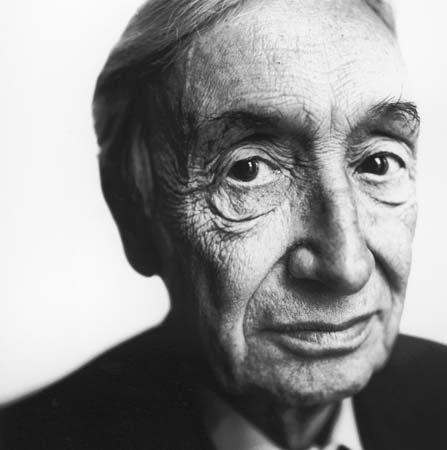
    When the young doctor saw this “crumpled heap in a corner of the private wing,” as he later put it, he instantly recognized “it” as Professor Sir Alfred Jules Ayer, also known as A.J. Ayer (or “Freddie” to his friends), the former Wykeham Professor of Logic at Oxford, and Britain’s most eminent philosopher.

    “He was very pleased that somebody knew who he was,“ said Dr. George, who spoke about the event for first time more than a decade later to the English playwright William Cash. “He looked very blue. His oxygen level was virtually incompatible with life.”

    Dr. George gave Ayer emergency oxygen and admitted him immediately to the intensive care unit, where his condition improved. “He would not have survived the day.”

    Ayer was my wife’s stepfather and brought her up. As his virtual; son-in-law I knew him well and was extraordinarily fond of him. Naturally, therefore, I paid him a visit. What, I asked, could I get him to relieve the tedium? A book was what he wanted—one to stretch his astonishing stainless steel brain. He asked me to buy Stephen Hawking’s A Brief History of Time, rather surprisingly riding high on the best-seller lists in Britain that spring. Within the hour I had placed it beside his bed as he slept, and tiptoed away. My visit was but one of many. Another of his legion of friends brought him a supply of smoked salmon—which his kind nurses pretended not to see.

    In the early evening of June 6, as Ayer later wrote, he “carelessly tossed” a slice of this salmon into his mouth. It went down the wrong way and he choked. Before the biomedical machinery in the ICU, flashing red, had managed to summon the emergency staff to his side at a run to revive him, Freddie had actually been clinically dead for four minutes. The hospital notes simply stated: “cardiac arrest with bradycardia, and asystole.”

    To give context to this mini medical drama it’s important to bear in mind that A.J. Ayer was an atheist. Not just any old atheist—the atheist as far as millions of Britons were concerned. In addition to establishing his reputation as one of the great analytic and rationalist philosophers of the century with such works as Language, Truth and Logic and the later Foundations of Empirical Knowledge, Ayer had spent most of his adult life putting the case very publicly on radio and television, as well as in print, for the “non-existence” of God—indeed arguing that the very idea of “God” was devoid of meaning, a position known in theology as igtheism. He had gone twelve rounds with the best and the brightest of the bishops and theologians in the land—and in the public mind he was thought, in the main, to have triumphed.

    According to his own account written for the London Daily Telegraph three months later, “the earliest remarks of which I have any cognizance…were made several hours after I returned to life…addressed to a French woman in French…Did you know that I was dead? The first time that I tried to cross the river I was frustrated—but my second attempt succeeded. It was most extraordinary. My thoughts became persons.”

    He went on to describe what he so vividly recalled “on the other side.”

    “I was confronted by a red light…Aware that this light was responsible for the government of the universe. Among its ministers were two creatures who had been put in charge of space…”

    Somehow Ayer was aware, however, “that space, like a badly fitted jigsaw puzzle, was slightly out of joint…with the consequence that the laws of nature had ceased to function as they should.”

    (One can surmise that one influence on Ayer in this “undiscovered country”—somewhere in the borderlands between life and death—were the ruminations and calculations of the great Cambridge cosmologist Stephen Hawking. Reading Hawking in hospital just before he choked had clearly set in motion a set of questions in Ayer’s mind about black holes and the mysterious continua of space-time. He confessed to me months later, however, that he’d found A Brief History of Time, which I had so lovingly given him, almost impossible to understand.)

    “I thought,” he went on, “that I could cure space by operating upon time…The ministers who had been given charge of time were in my neighborhood and I proceeded to hail them…” They however seemed quite uninterested in the philosopher’s offer, despite his twirling his grandfather’s fob watch (which he always carried) around furiously to attract their attention. Ayer’s “experience” came to end, as he reported, with him in “despair.”

    (It must be said—as Ayer realized—that this imagery, embellished in this case by Hawking and Ayer’s thorough grounding in the classics, are a commonplace today, a byproduct of high-tech medicine’s power to resurrect the “dead.”)

    He ended the article by asserting that “my recent experiences have slightly weakened my conviction that my genuine death, which is due fairly soon, will be the end of me, though I continue to hope that it will be. They have not weakened my conviction that there is no God.”

    Three months later, alarmed by the world-wide publicity his piece engendered (“Afterlife Shocker” ran the lead headline on the front page of the National Enquirer), Ayer retreated yet further, publishing a short addendum in The Spectator. “What I should have written at the end (instead of the words ‘slightly weakened’),” he wrote, “was that my experiences have weakened, not my belief that there is no life after death, but my inflexible attitude towards that belief.”

    In these two pieces—the second in particular—Ayer was clearly at pains to preserve his reputation, of which he was almost childishly proud. In the public imagination he was the champion slayer of theological nonsense, the pioneer of logical positivism, and the winner—in his own eyes at any rate—of his famous 1949 BBC radio debate about the existence or otherwise of god with Father Frederick Copleston, Britain’s most formidable modern Catholic philosopher. (Ludwig Wittgenstein, listening in distant Dublin, took a typically waspish view, complaining to a friend that Copleston had contributed “nothing,” and Ayer had been “shallow.”) Was Ayer now to be remembered as having buckled—as Voltaire had—on the threshold of St. Peter’s pearly gate? No. Despite the river, the light and the rude, dismissive, Masters of the Universe, the experience had turned him into “a born-again atheist,” he maintained, reaffirming his conviction that God was a barbarous relic, the afterlife a fairy tale.

    That was in public. Privately, and secretly, the story is more intriguing. On the day of that first “death” (the second and final one occurred eleven months later), Dr. George returned to Ayer’s bedside. “I came back to talk to him later that evening,” he told Cash. “Very discreetly, I asked him, as a philosopher, what was it like to have had a near-death experience? He suddenly looked rather sheepish. Then he said, ‘I saw a Divine Being. I’m afraid I’m going to have to revise all my various books and opinions.’

    “He clearly said ‘Divine Being,’” said Dr. George. “He was confiding in me, and I think he was slightly embarrassed because it was unsettling for him as an atheist. He spoke in a very confidential manner. I think he felt he had come face to face with God, or his maker, or what one might say was God.

    “Later, when I read his article, I was surprised to see he had left out all mention of it. I was simply amused. I wasn’t very familiar with his philosophy at the time of the incident, so the significance wasn’t immediately obvious.”

    (Ayer never wrote or spoke of this conversation with the doctor who saved his life—not to his wife, nor to Nicholas his adult son. It may be that he had no recollection of it. When it came to light as result of Dr. George’s contacting William Cash, both my mother-in-law and Nicholas were skeptical. Why, though, would one doubt the word of an upstanding and seemingly discreet senior consultant physician? I have no reason to disbelieve him.)

    When Ayer was released by his doctors a month later, friends and family did notice that he’d changed.

    “He became so much nicer after he died,” was the mordant way my mother-in-law, Dee Wells, put it to Cash. “He was not nearly so boastful. He took an interest in other people.”

    What she also noticed is that as his life ebbed away, Ayer began spending a great deal of time with Father Frederick Copleston, his former opponent in the BBC debate. Until then they’d never been particularly close, though Ayer had grudging respect for Copleston’s muscular mind. (The erudite Jesuit had taken on Bertrand Russell on the BBC a year before arguing with Ayer, to defend St. Thomas Aquinas’ five metaphysical proofs of god’s existence, not a position guaranteed to endear him to many modern rationalists). Nevertheless, in the last year of his life, Ayer spent many hours in Copleston’s company, talking and arguing about who knows what. The must have made an odd couple seated together in the darkest recesses of London’s Garrick Club. The Catholic divine even graced Ayer’s scrupulously secular cremation.

    “In the end, he was Freddie’s closest friend,” said Dee. “It was quite extraordinary.”

    Share this:

    • Share on X (Opens in new window) X
    • Share on Facebook (Opens in new window) Facebook
    • Email a link to a friend (Opens in new window) Email
    • Print (Opens in new window) Print
    • Share on Reddit (Opens in new window) Reddit
    Like Loading…
  • Petiţie pentru digitalizarea manuscriselor greceşti ale Noului Testament din România: semnează şi dă mai departe!

    June 9, 2010

    Poate că veţi spune: ţara arde şi filologii/teologii nu mai pot de grija manuscriselor greceşti. O astfel de simplificare grosieră dă seama nu doar de nivelul de cultură sau al simţului civic, ci de puternica condiţionare a sărăciei noastre materiale de cea sufletească.

    Vrem sau nu, va trebui să recunoaştem că ceea ce numim criză românească este de fapt o puternică devoalare, deloc pudică, a unui mod de gândire (exacerbat de egoistă), de relaţionare (exagerat de limitată la interesul imediat) şi de practică socială (clientelară, de haită). De douăzeci de ani asistăm la spectacolul public în care, spre bucuria ignorantă a mulţimii hrănită cu mentalitatea statului asistenţial şi mituită la intervale regulate (de regulă la patru ani), demnitatea s-a estompat în modelele de tupeişti, şmecheri, iar umanitatea şi bunul simţ sunt supuse coroziunii profitului hic et nunc. Însă ce semănăm, aceea culegem! Când exacercebăm saturarea de prezent, consumat feroce şi diform, să nu ne mai mirăm că nu vom mai avea viitor! Când îl sufocăm pe celălalt cu potopul de revendicări egoiste, să nu ne mirăm că nu mai este nimeni care să ne asculte!

    Am profunda convingere că putem spera la ceva mai bun în ţara asta doar prin educaţie + redimensionarea pretenţiilor faţa de Dumnezeu şi faţă de celălalt concomitent cu  redimensionarea pretenţiilor propriei personalităţi, pe care trebuie să ni le asumăm faptic, nu doar declarativ.

    Tocmai de aceea, în profundă criză nu doar economică, ci şi de sistem, de gândire a sistemului social, a torentului de aşteptări, de recalibrări şi repoziţionări ale decenţei şi muncii faţă de efemeritatea succesului gratuit şi imediat, o ieşire din sfera grijii de sine pentru a-l întâmpina pe Celălalt nu poate fi decât o excelentă terapie.

    Reiau aici apelul bunului meu prieten Emanuel Conţac, apel ce vizează semnarea unei petiţii naţionale pentru digitalizarea MSS greceşti ale N.T., aflate în posesia unor instituţii româneşti. Consideraţi acest demers ca fiind unul de exercitare a dreptului democratic de a responsabiliza decidenţi şi instituţii care trebuie să fie în slujba interesului public, al societăţii.

    Prin această petiţie atragem atenţia asupra necesităţii transpunerii în format digital a manuscriselor greceşti ale Noului Testament aflate la Biblioteca Academiei Române, Muzeul Naţional de Artă al României şi Biblioteca Centrală Universitară „Mihai Eminescu” din Iaşi.

    De peste un an şi jumătate, BAR şi MNAR refuză în mod sistematic parteneriatul propus de Centrul pentru Studierea Manuscriselor Noului Testament (www.csntm.org), în lipsa oricărui proiect alternativ credibil. Aceeaşi lipsă de interes a dovedit, în perioada martie-mai 2010, şi Biblioteca Centrală Universitară „Mihai Eminescu” din Iaşi.

    Considerăm că dezinteresul arătat de aceste trei instituţii faţă de conservarea şi valorificarea digitală a patrimoniului propriu este îngrijorător şi dorim să tragem un semnal de alarmă privitor la această situaţie, pe care o considerăm inacceptabilă.

    Această petiţie este iniţiată de Asociaţia de Filologie şi Hermeneutică Biblică din România şi o puteţi citi integral AICI.

    Dacă subscrieţi acestei iniţiative, vă rog să trimiteţi un email pe adresa

    manuscrise.grecesti@gmail.com,

    cu următoarele detalii:

    Nume şi prenume:

    Profesie:

    Localitate:

    După campania de strângere de semnături, petiţia va fi depusă la instituţiile vizate (BAR, MNAR, BCU Iaşi), la Ministerul Culturii, Ministerul Educaţiei, Comisia de Cultură a Camerei Deputaţilor şi Comisia de Cultură a Senatului.

    Textul petiţiei şi lista cu semnături vor fi trimise şi principalelor cotidiene naţionale şi săptămânalelor de cultură din România.

    Vă mulţumesc!

    Share this:

    • Share on X (Opens in new window) X
    • Share on Facebook (Opens in new window) Facebook
    • Email a link to a friend (Opens in new window) Email
    • Print (Opens in new window) Print
    • Share on Reddit (Opens in new window) Reddit
    Like Loading…
  • Love…, there is no safe investment – C. S. Lewis

    June 8, 2010

    “There is no safe investment.  To love at all is to be vulnerable.  Love anything, and your heart will certainly be wrung and possibly broken.  If you want to make sure of keeping it intact, you must give your heart to no one, not even an animal.  Wrap it carefully round with little hobbies and little luxuries; avoid all entanglements; lock it up safe in the casket or coffin of selfishness.  But in that casket- safe, dark, motionless, airless- it will change.  It will not be broken; it will become unbreakable, impenetrable, irredeemable.  The alternative to tragedy, or at least to the risk of tragedy, is damnation.  The only place outside Heaven where you can be perfectly safe from all the dangers and perturbations of love is Hell.”

    (C. S. Lewis, The Four Loves, Harcourt Brace, 1991, p. 121)

    Share this:

    • Share on X (Opens in new window) X
    • Share on Facebook (Opens in new window) Facebook
    • Email a link to a friend (Opens in new window) Email
    • Print (Opens in new window) Print
    • Share on Reddit (Opens in new window) Reddit
    Like Loading…
«Previous Page
1 … 120 121 122 123 124 … 151
Next Page»

Alonewithothers's Blog

Blog at WordPress.com.

  • April 2025
  • March 2025
  • February 2025
  • December 2024
  • November 2024
  • July 2024
  • September 2022
  • July 2022
  • April 2022
  • March 2022
  • February 2022
  • January 2022
  • December 2021
  • November 2021
  • October 2021
  • August 2021
  • November 2019
  • July 2019
  • November 2018
  • October 2018
  • July 2018
  • June 2018
  • August 2017
  • July 2017
  • June 2017
  • April 2017
  • February 2017
  • January 2017
  • December 2016
  • November 2016
  • October 2016
  • September 2016
  • August 2016
  • July 2016
  • June 2016
  • May 2016
  • April 2016
  • March 2016
  • February 2016
  • January 2016
  • December 2015
  • November 2015
  • October 2015
  • July 2015
  • January 2015
  • November 2014
  • August 2014
  • July 2014
  • June 2014
  • April 2014
  • March 2014
  • February 2014
  • January 2014
  • December 2013
  • November 2013
  • October 2013
  • September 2013
  • August 2013
  • July 2013
  • June 2013
  • May 2013
  • April 2013
  • March 2013
  • February 2013
  • January 2013
  • December 2012
  • November 2012
  • October 2012
  • September 2012
  • August 2012
  • July 2012
  • June 2012
  • May 2012
  • April 2012
  • March 2012
  • February 2012
  • January 2012
  • December 2011
  • November 2011
  • October 2011
  • September 2011
  • August 2011
  • July 2011
  • June 2011
  • May 2011
  • April 2011
  • March 2011
  • February 2011
  • January 2011
  • December 2010
  • October 2010
  • September 2010
  • August 2010
  • July 2010
  • June 2010
  • May 2010
  • April 2010
  • March 2010
  • February 2010
  • January 2010
  • December 2009
  • November 2009
  • October 2009
  • September 2009
  • August 2009
Loading Comments...
  • Subscribe Subscribed
    Alonewithothers's Blog
    Join 154 other subscribers

    Have a WordPress.com account? Log in now.

  • Alonewithothers's Blog
    View site in Reader
    Manage subscriptionsSign upLog in
    Report this content
    Collapse this bar
%d