
• Continuarea textului de AICI

    3. Evidența dincolo de evidențe

    Sfidând parcă toate filtrele de securitate/confort pe care un intelectual le pune în fața oricărei chestiuni, Isus ii face lui Nicodim chemarea îndrăzneață de a trece peste evidențele rațiunii care îi cenzurează acțiunile. Contradicțiile din chemarea lui Isus sunt o evidență pentru limitarea cu care rațiunea noastră operează în această lume. Pentru a intra în Împărăţia lui Dumnezeu şi a căpăta viaţa veşnică este nevoie de o inserție a divinului în lumea creată, ceea ce provoacă repulsii, disconfort, uluire, reacție alergică din partea noastră. Obișnuiți cu răul pe care l-am făcut suportabil, chestiunea mântuirii nu avea cum să fie proiectată și realizată de noi. Era nevoie de mântuirea reală, o mântuire care se realizează prin acţiunile Trinităţii:

    – naşterea din Duhul lui Dumnezeu (3:5-8), care vine ca o urmare a

    – credinţei în jertfa Fiului (3:13-15),

    – expresie a dragostei Tatălui (3:16-17).

    În fața acestui meniu, singurul lucru care lipsește este singura acţiune din partea omului: credinţa. Chiar dacă ea este un dar al lui Dumnezeu, credinţa este strict legată de venirea la lumină (3:18-21). Oricât ne-am clama inocența și puritatea, există un înainte murdărit de păcat – necinstirea lui Dumnezeu și nelegiurea față de sine, semen și lumea în care trăim.  Oricât am condamna protestantismul pentru eticizarea religiei, componenta morală, a vinovăției reale a omului nu poate fi negată.

    Isus pare să-i spună celui care, împreună cu toţi cei ca el, îşi fabricase un sistem religios și intelectual bine conturat, dar care i-a devenit temniţă şi nu cale: “Nicodime, ce este născut din carne este carne, iar carnea şi sângele nu pot moşteni Împărăţia lui Dumnezeu!”

    Credinţa pe care i-o cere Isus lui Nicodim şi tuturor celor care vor să intre în Împărăţia lui Dumnezeu are următoarele coordonate, paradoxale pentru intelectul cuminte:

    – să crezi că un Duh te poate naşte la o viaţă nouă – sfidând senzorialitatea cu care țesem harta cunoscutului și a necunoscutului, a existentului și a inexistentului. Și totuși, dincolo de alchimia necunoscută a nașterii vieții din viață, vântul suflă unde vrea, dar îi auzi vuietul!

    – să crezi că poţi avea viaţă veşnică prin răstignirea Fiului omului care trebuia să fie Împărat – sfidând ipocrita noastră preocupare față de suferință, într-o realitate încă contaminată de răul, nedreptatea, crima, corupția atât de omenești, dar pentru care Îl învinuim pe Dumnezeu;

    – să crezi că Dumnezeu te-a iubit aşa de mult că şi-a trimis propriul Fiu la moarte pentru a dărui viaţa veşnică celor ce cred în acest Fiu – unde este “înțeleptul” acestei lumi să teoretizeze compasiunea umană în fața acestei evidențe a suferinței unui Dumnezeu ce se lasă omorât de creatura mîinilor Sale? În fața seminței care trebuie să moară ca să aducă roadă, noi filosofăm grațios despre cum clepsidra timpului ne înghite fărâmele de fericire iluzorie!

    Dincolo de evidențele contrariante ale acestei nebunii de a crede într-un astfel de Dumnezeu stă evidența că cel născut din apă și din Duh este unul care are un alt orizont, un orizont care prefigurează existența după potopul judecății, nu cea dinaintea lui! Atunci-ul se prelinge în acum, fără a-i fi furată savoarea împlinirii sale în evul ce va veni …

  • We had the experience, but missed the meaning. (T. S. Eliot)

    The old production-oriented culture demanded what the historian Warren Susman termed character. The new consumption-oriented culture demands what he called personality. The shift in values is a shift from a fixed morality to the artifice of presentation. The old cultural values of thrift and moderation honored hard working, integrity, and courage. The consumption-oriented culture honors charm, fascination, and likeability. “The social role demanded of all in the new culture of personality was that of a performer,” Susman wrote. “Every American was to become a performing self”.

    The advances of technology and science, rather than obliterating the world of myth, have enhanced its power to deceive. We live in imaginary, virtual worlds created by corporations that profit from our deception. Products and experiences – indeed, experience as product – offered up for sale, sanctified by celebrities, are mirages. They promise us a new personality. They promise us success and fame. They promise to mend our brokenness. (…)

    Blind faith in illusions is our culture’s secular version of being born again. These illusions assure us that happiness and success is our birthright. They tell us that our catastrophic collapse is not permanent. They promise that pain and suffering can always be overcome by tapping into our hidden, inner strengths.. They encourage us to bow down before the cult of the self. To confront these illusions, to puncture their mendacity by exposing the callousness and cruelty of the corporate state, signals a loss faith. It is to become an apostate. The culture of illusion, one happy thoughts, manipulated emotions, and trust in the beneficence of power, means we sing along with the chorus or are instantly disappeared from view like the losers on a reality show.

    Chris Hedges, Empire of Illusion. The End of Literacy and the Triumph of Spectacle, Alfred A. Knopf, 2009, p. 51, 52-53.

  • If people stop believing in God, the problem is not that they will then believe in nothing, it’s that they’ll believe anything.(C. S. Lewis)

    What Huxley feared was that there would be no reason to ban a book, for there would be no one who wanted to read one. Orwell feared those who would deprive us of information. Huxley feared those who would give us so much that we would be reduced to passivity and egoism. Orwell feared that the truth would be concealed from us. Huxley feared the truth would be drowned in a sea of irrelevance. Orwell feared we would become a captive culture. Huxley feared we would become a trivial culture, preoccupied with some equivalent of the feelies, the orgy porgy, and the centrifugal bumble-puppy. As Huxley remarked in Brave New World Revisited, the civil libertarians and rationalists who are ever on the alert to oppose tyranny “failed to take into account man’s almost infinite appetite for distractions.” In 1984, Huxley added, people are controlled by inflicting pain. In Brave New World, they are controlled by inflicting pleasure. In short, Orwell feared that what we hate will ruins us. Huxley feared that what we love will ruins us.

    Neil Postman, Amusing Ourselves to Death: Public Discourse in the Age of Show Business (New York: Penguin, 1985), 80

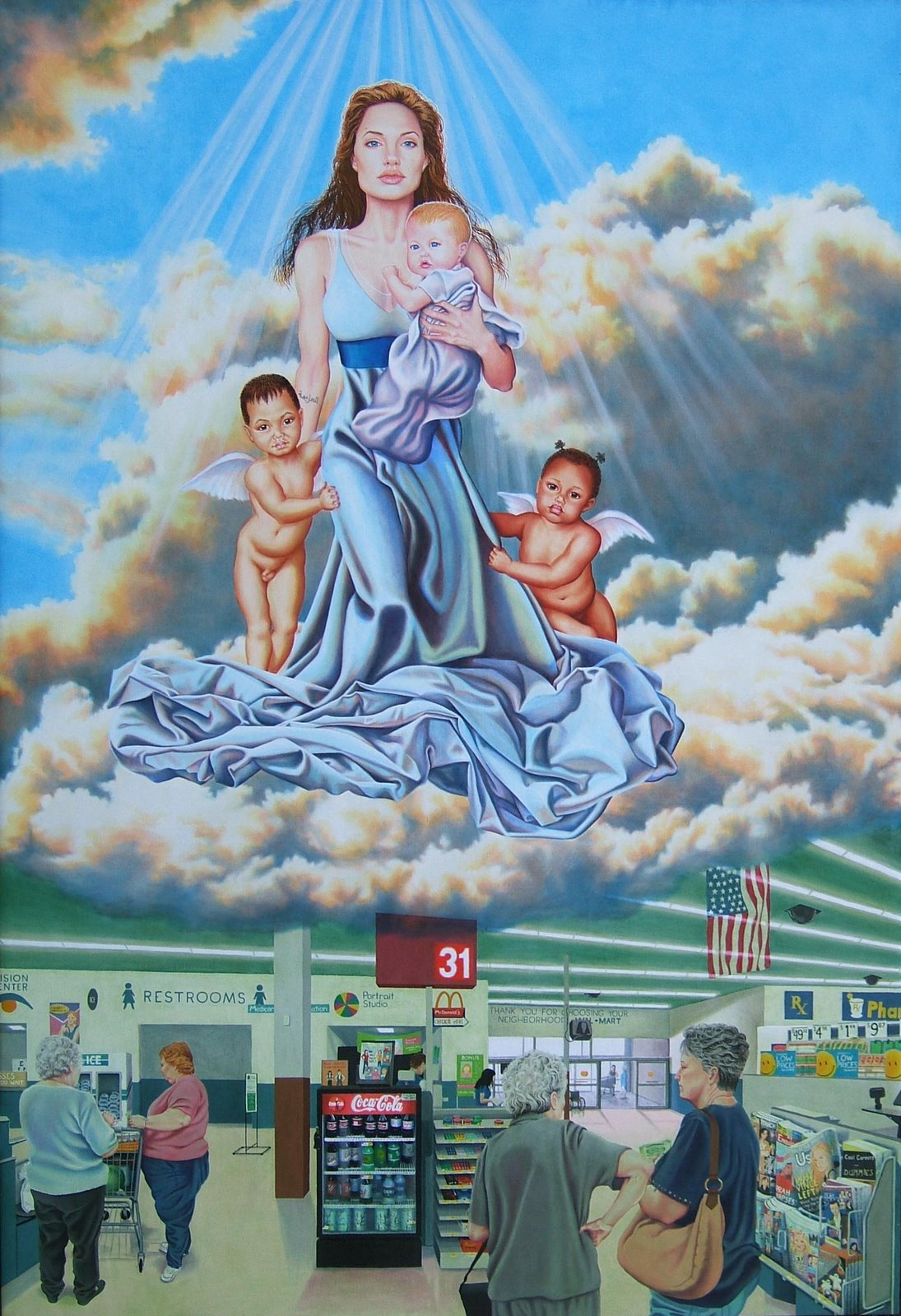
    Blessed Art Thou by Kate Kretz

  • What does the contemporary self want? The camera has created a culture of celebrity; the computer is creating a culture of connectivity. As the two technologies converge — broadband tipping the Web from text to image, social-networking sites spreading the mesh of interconnection ever wider — the two cultures betray a common impulse. Celebrity and connectivity are both ways of becoming known. This is what the contemporary self wants. It wants to be recognized, wants to be connected: It wants to be visible. If not to the millions, on Survivor or Oprah, then to the hundreds, on Twitter or Facebook. This is the quality that validates us, this is how we become real to ourselves — by being seen by others. The great contemporary terror is anonymity. If Lionel Trilling was right, if the property that grounded the self, in Romanticism, was sincerity, and in modernism it was authenticity, then in postmodernism it is visibility.

    William Deresiewicz, “The End of Solitude,” The Chronicle of Higher Education 55:21 (30 Jan. 2009): B6

  • Now the death of God combined with the perfection of the image has brought us to a whole new state of expectation. We are the image. We are the viewer and the viewed. There is no other distracting presence. And the image has all the Godly powers. It kills at will. Kills effortlessly. Kills beautifully. It dispenses morality. Judges endlessly. The electronic image is man as God and the ritual involved leads us not to a mysterious Holy Trinity but back to ourselves. In the absence of a clear understanding that we are now the only source, these images cannot help but return to the expression of magic and fear proper to idolatrous societies. This in turn facilitates the use of the electronic image as propaganda by whoever can control some part of it.

    John Ralston Saul, Voltaire’s Bastards (New York: Vintage, 1992), 460.