

• August 28, 2011

    American Theocracy Revisited

    By

    During George W. Bush’s presidency, many liberal and secular Americans came to regard religious conservatives not merely as their political opponents, but as a kind of existential threat. The religious right, they decided, wasn’t a normal political movement. Rather, it was an essentially illiberal force, bent on gradually replacing our secular republic with what Kevin Phillips’s 2006 best seller dubbed an “American Theocracy.”

    These anxieties dissipated once the Republican majority imploded. In the Obama era, debates over the economy and health care crowded out arguments about sex education and embryo destruction, and liberals found a new set of right-wing extremists to worry about: Tea Party activists, birth certificate obsessives, the Koch brothers.

    But with the rise of first Michele Bachmann and then Rick Perry in the presidential polls, and the belated liberal realization that many Tea Partiers are also evangelical Christians, the fear of theocracy has suddenly returned. Beginning with Ryan Lizza’s profile of Bachmann in The New Yorker, a spate of recent articles have linked the Republican presidential candidates to scary-sounding political theologies like “Dominionism” and “Christian Reconstructionism,” and used these links to suggest that Christian extremism is once more on the march.

    In this week’s New York Times Magazine, The Times’s outgoing executive editor, Bill Keller, argues that Perry and Bachmann should face tough questions about their religious beliefs. The Republican hopefuls’ associations, he writes, should force us to “confront our scruples about the privacy of faith in public life — and to get over them.”

    Keller is absolutely right. The separation of church and state in the United States has never separated religion from politics, and the “private” beliefs of politicians have often had very public consequences. When candidates wear their religion on their sleeve, especially, the press has every right to ask how that faith relates to their political agenda.

    But here are four points that journalists should always keep in mind when they ask and then write about religious beliefs that they themselves don’t share.

    First, conservative Christianity is a large and complicated world, and like other such worlds — the realm of the secular intelligentsia very much included — it has various centers and various fringes, which overlap in complicated ways. Sometimes teasing out these connections tells us something meaningful and interesting. But it’s easy to succumb to a paranoid six-degrees-of-separation game, in which the most radical figure in a particular community is always the most important one, or the most extreme passage in a particular writer’s work always defines his real-world influence.

    Second, journalists should avoid double standards. If you roll your eyes when conservatives trumpet Barack Obama’s links to Chicago socialists and academic radicals, you probably shouldn’t leap to the conclusion that Bachmann’s more outré law school influences prove she’s a budding Torquemada. If you didn’t spend the Jeremiah Wright controversy searching works of black liberation theology for inflammatory evidence of what Obama “really” believed, you probably shouldn’t obsess over the supposed links between Rick Perry and R. J. Rushdoony, the Christian Reconstructionist guru.

    Third, journalists should resist the temptation to apply the language of conspiracy to groups and causes that they find unfamiliar or extreme. Republican politicians are often accused of using religious “code words” and “dog whistles,” for instance, when all they’re doing is employing the everyday language of an America that’s more biblically literate than the national press corps. Likewise, what often gets described as religious-right “infiltration” of government usually just amounts to conservative Christians’ using the normal mechanisms of democratic politics to oust politicians whom they disagree with, or to fight back against laws that they don’t like.

    Finally, journalists should remember that Republican politicians have usually been far more adept at mobilizing their religious constituents than those constituents have been at claiming any sort of political “dominion.” George W. Bush rallied evangelical voters in 2004 with his support for the Federal Marriage Amendment, and then dropped the gay marriage issue almost completely in his second term. Perry knows how to stroke the egos of Texas preachers, but he was listening to pharmaceutical lobbyists, not religious conservatives, when he signed an executive order mandating S.T.D. vaccinations for Texas teenagers.

    This last point suggests the crucial error that the religious right’s liberal critics tend to make. They look at Christian conservatism and see a host of legitimately problematic tendencies: Manichaean rhetoric, grandiose ambitions, apocalyptic enthusiasms. But they don’t recognize these tendencies for what they often are: not signs of religious conservatism’s growing strength and looming triumph, but evidence of its persistent disappointments and defeats.

  • Follow Me!

    În veselia comună a utopiei libertăţii şi a diferenţierii continue a epocii noastre, nu pot decăt să constat cum suntem tot mai înghesuiţi de imperative amabile: FOLLOW ME/US! De exemplu, pe orice străduţă a lumii virtuale te-ai pierde, eşti mereu sfătuit/rugat să devii partenerul fidel al acelei locaţii. Infidelitatea aparentă a respingerii unor căi te va duce fix în braţele cuprinzătoare ale alternativei. Niciodată nu rămâi orfan, toţi caută să te salveze de la însingurare. Toţi îţi vor oferi paradisul, chiar şi cei s-au îndrăgostit atât de mult de ostentaţia eşecului şi a căderii luciferice încât nu-şi  mai scot nasul din cenuşa lui.

    Nu credeam că regnul polimorf şi anti-ierarhic al realităţii virtuale  (nu degeaba vorbim acum de o ontologie a suprafeţei, a reţelei) va împrumuta un concept al vechii realităţi, cel al tradiţionalei pastorale. Oridecâteori consimţi să apeşi pe “Follow Me!” devii un simpatizant, susţinător, o mică oiţă într-o turmă. Desigur, îţi poţi păstra blăniţa cochetă (cu care te poţi lăuda mai departe), chiar poţi refuza să fii muls de pretenţiile celor pe care “îi urmezi”, dar, cu toată această independenţă, împarţi ceva din culoarul pe care credeai că alergi de unul singur.

    Oare nenea Derrida, cel care ar fi instaurat dictatura ”diferenței”, ar fi pus pe blogul său “Follow Me!”? Sau cei care îţi “deschid ochii” cu privire la conspiraţiile și manipulările lumii noastre ar accepta refuzul tău de a le urma calea?

    Cine sunt cei după care ne ghidăm? Ce cale urmăm? Ce lider(i)? În ce turmă ne înregimentăm? Ce hrană păpăm? Pe unde şi când simţim că ne-am rătăcit în companii aparent benevole, dar care se dovedesc a fi periculoase, nocive?

    Un minut de desprindere din cochilia fidelităţilor ar putea fi suficient pentru a răspunde la aceste întrebări. Oare ne-ar place răspunsul pe care îl găsim? Cel puţin în Biblie (cartea atât de ”nivelatoare”, ”autocrată”, ”sufocantă pentru libertatea individuală”)  găsesc un astfel de îndemn, chiar de mai multe ori. Dar cine mai are timp pentru astfel de frământări? Follow the crowd and be happy!

  • În epoca meta-realităţii mediatice, devenim simpli cobai cotizanţi. În ciuda fermecătoarelor etichete și a menevrelor stilistice cu care se autoamăgesc tinerii, spiritul lor ”rebel” e bine înhămat la carul propagandei. Nimic nou sub soare! … poate doar pretențiile arogante sunt mai mari, de aceea și auto-amăgirea va fi pe măsură. Vorba lui Frédéric Beigbeder:

    Trăim în primul sistem de exploatare a omului de către om, împotriva căruia până şi libertatea este neputincioasă. În schimb, el mizează totul pe libertate, asta e cea mai mare găselniţă a lui. Orice critică îi conferă rolul pozitiv, orice pamflet întăreşte iluzia toleranţei sale mieroase. Vă supune cu eleganţă. Totul e îngăduit, nimeni nu vine să te porcăiască dacă dai totul cu cracii-n sus. Sistemul şi-a atins scopul: însăşi nesupunerea a ajuns o formă de supunere (199.000 lei, p. 3).

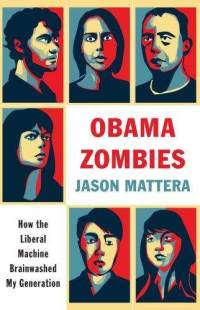
    Barack Obama este exemplul cât se poate de clar despre cum se poate pompa iluzii perfide unei generații care își face titlu de glorie din independență și spirit critic, dar este credulă și fanatică în expresia aroganței sale. Cartea lui Jason Mattera, ”Obama Zombies: How the Liberal Machine Brainwashed My Generation” (Threshold Editions, New York, 2010) este o bună documentare despre super-excitația liberală a celor ce excelează în descrierea fabricii de idoli ale altora, dar nu-și pot descrie propria industrie idolatră.

    Ciudate vremuri am ajuns când contra-cultura este exprimată împotriva tiraniei senilității liberalismului fancy, dar tâmp!

    This book is a countercultural statement. It is out of step with the thoughts of many of my generation, and that is precisely why this book matters. This is a book for every freethinking, freedom-loving person who is fed up with the left’s lobotomy of a gen- eration. Ours must be a generation that stands athwart history yelling, “Hey, jackass! Get your government off my freedom!”
    Some believe it’s too late, that the legions of Obama Zombies are beyond awakening. I don’t. I believe they can be revived. I’m an optimist. But I’m also a realist. It will take jolting the Obama Zombies of our world with facts, the kind of facts that sappy, hyperemotional liberalism loathes. Evidence, logic, thinking–those are liberalism’s gravest threats (p. XII).

    What is an Obama Zombie?
    Glad you asked.
    Rewind to the night of the 2008 election. Obama’s victory wasn’t just political; to many young people, it wrought salvation. Supporting Barack during the election was one thing. But him defeating John McCain?
    Oh gracious God!
    After Obama was pronounced the victor, throngs of students at Maine’s Bowdoin College huddled in a circle; some hands were held, others were raised to the sky (from whence Dear Leader descended) as they collectively wept, bowed their heads, and sang . . . “Amazing Grace.” We were the “wretches,” once blind and lost, until B.H.O. opened our eyes with his outstretched rod touching the land. How sweet the sound indeed!
    As one patchouli-smelling hippie on campus exhorted, “It’s definitely the most spiritual experience I’ve had in a while.”1 Meeting Ozzy Osbourne in the flesh was her previous one.
    Hyperemotional reactions were everywhere.
    In what can only be described as an O-gasm, one Florida female student proclaimed, “It’s probably the most excited I’ve ever been in my entire life. I seriously think I had an emotional seizure or something. My whole body seized up. I couldn’t breathe. It’s like I really mattered. . . . I picked the president! That was me! . . . I think I’m in love with America right now!”2
    Outside the White House, legions of young people organized an impromptu rally through text messaging and word of mouth. By the time it concluded, they all needed new underwear.
    One young lady, holding an Obama balloon, proclaimed that B.H.O. was going to bring “peace to everybody in the world.” (pp. IX-X)

    Being a liberal is easy. Promising every constituency under the sun “free” goodies (otherwise known as goodies paid for by you!) takes little effort, except for the ability to lie one’s you-know-what off.
    Smashing the Obama cult is going to take a united effort.
    Can we awaken our generation of Obama Zombies?
    “Yes, we can!” (p. 207)

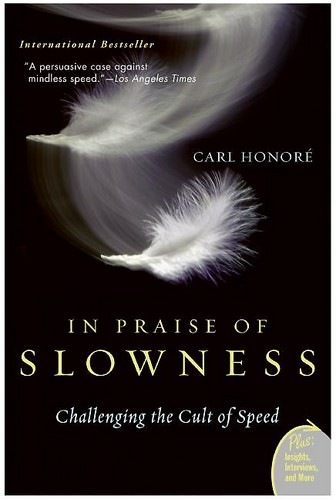
  • In Praise of Slow

    This is an important, engaging book. Subtitled “How a Worldwide Movement Is Challenging the Cult of Speed,” In Praise of Slow explores the “Slow” revolution as it applies to food, city life, cars, medicine, sex, work and children. Probably best known for the Slow Food movement, which began in Italy in response to fast food, Slow has branched out in many directions. Thirty cities in Italy have now designated themselves as Slow Cities, meaning they do everything they can to consider the quality of life in their urban centers rather than merely the economic impact of regulations. This results in fewer cars, less smog, more biking and walking, and more small shops. Honoré points out that the cult of speed has been with us since the Industrial Revolution, and it’s getting worse, with businesses routinely expecting 60 to 80 hours a week from workers, young children with the schedules of high-powered executives, rampant road rage, and doctors who don’t have time to listen to their patients. “Boredom … is a modern invention,” the author states. “Remove all stimulation, and we fidget, panic and look for something, anything, to do to make use of the time.” But Honoré is no true-believer–he questions every aspect of the Slow movement and keeps coming up with the conclusion that it just makes sense: life in the slow lane is more enjoyable, more pleasurable, more humane. This is a remarkable book that should be read by every resident of today’s frenzied urban world. –Mark Frutkin