
• Fabricating Jesus

    I perfectly agree with the idea that cultural conditionning of the Gospel´s time should be known and valued, but we should also be aware of the cultural conditionning of those who live now and interpret the Gospel. Considering this unique measure, I observed a very inappropriate attitude to accept uncritically another “gospels” and writings, just because, in a Gnostic game of inverting values, these are not (yet?) the opinion of the majority. It is an obvious fact that we live in a cultural environment with a paranoid obsession of conspiracy and misinterpretation (as diseases of our nihilistic times). Am I wrong if I assume that heterodoxy and heresy are now accepted as dogma and orthodoxy not because of solid arguments, but rather for reasons related to psychopathology? Willing to believe is so easily to see even to those who define themselves  as “freethinkers” and “skeptics”! A man cannot jump over his own shadow!

    The need for “emancipation” has the perverse effect of overbidding to antique authors the conspiratorial genius and the perspicacity  to fabricate a Gospel as complex as that Gospel it is. Seeing the combinatorial creative writing of hyper liberals (humanists, atheists and so on), seeing the conspiracies of authors our age being attributed to authors that lived thousand years ago, I think it is worth hermeneutic nihilism can count! Better no interpretation, than a glamorous one, folded on the audience’s appetite!

    But, better than that, I recommend

    Dethroning Jesus: Exposing Popular Culture’s Quest to Unseat the Biblical Christ (Darrell L. Bock, Daniel B. Wallace, Thomas Nelson Inc. 2007)

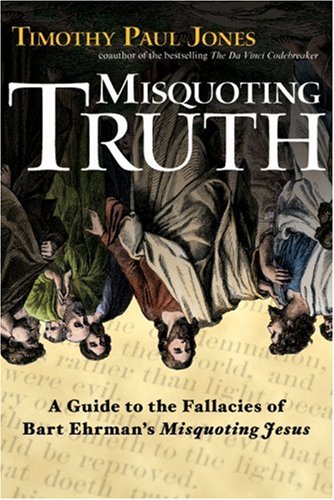
    Misquoting Truth: A Guide to the Fallacies of Bart Ehrman’s “Misquoting Jesus” (Timothy Paul Jones, IVP, 2007)
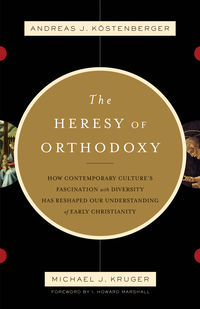
    The Heresy of Orthodoxy: How Contemporary Culture’s Fascination with Diversity Has Reshaped Our Understanding of Early Christianity (Andreas J. Köstenberger & Michael J. Kruger, IVP, 2010)
    and Fabricating Jesus (Craig Evans, IVP, 2006), an excellent effort to deconstruct the “modern”, “independent” and “scientifically”rewriting of the origins of Christianity. In contradistinction to the “newer, radical, minimalist, revisionist, obscurantist and faddish versions of the Jesus story,” the traditional one is both more convincing and more in tune with the historical and literary evidence.
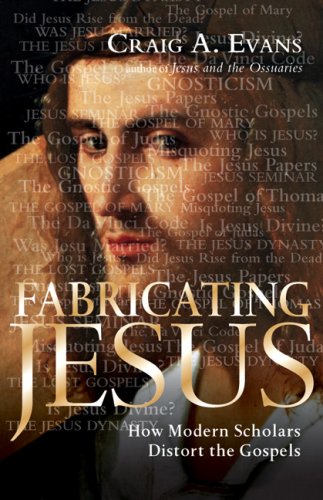
    Description: Modern historical study of the Gospels seems to give us a new portrait of Jesus every spring–just in time for Easter. The more unusual the portrait, the more it departs from the traditional view of Jesus, the more attention it gets in the popular media. Why are scholars so prone to fabricate a new Jesus? Why is the public so eager to accept such claims without question? What methods and assumptions predispose scholars to distort the record? Is there a more sober approach to finding the real Jesus? Commenting on such recent releases as Bart Ehrman’s Misquoting Jesus, James Tabor’s The Jesus Dynasty, Michael Baigent’s The Jesus Papers and The Gospel of Judas, for which he served as an advisory board member to the National Geographic Society, Craig Evans offers a sane approach to examining the sources for understanding the historical Jesus.

    Contents:

    Preface
    Introduction

    1. Misplaced Faith and Misguided Suspicion: Old and New School Skeptics
    2. Cramped Starting Points and Overly Strict Critical Methods: The Question of Authenticity
    3. Questionable Texts–Part I. The Gospel of Thomas
    4. Questionable Texts–Part II. The Gospel of Peter, The Egerton Gospel, the Gospel of Mary and the Secret Gospel of Mark
    5. Alien Contexts: The Case Against Jesus as Cynic
    6. Skeletal Sayings: Maxims Without a Context
    7.Diminished Deeds: A Fresh Look at Healings and Miracles
    8. Dubious Uses of Josephus: Understanding Late Antiquity
    9. Anachronisms and Exaggerated Claims: Christianities Lost and Otherwise
    10. Hokum History and Bogus Findings: Jesus Between the Lines
    11. Will the Real Jesus Please Stand Up? Unfabricating His Aims and Claims

  • Jordan battles to regain ‘priceless’ Christian relics

    29 March 11 01:30 ET

    Book found in Jordan

    By Robert Pigott BBC News religious affairs correspondent

    They could be the earliest Christian writing in existence, surviving almost 2,000 years in a Jordanian cave. They could, just possibly, change our understanding of how Jesus was crucified and resurrected, and how Christianity was born.

    A group of 70 or so “books”, each with between five and 15 lead leaves bound by lead rings, was apparently discovered in a remote arid valley in northern Jordan somewhere between 2005 and 2007.

    A flash flood had exposed two niches inside the cave, one of them marked with a menorah or candlestick, the ancient Jewish religious symbol.

    A Jordanian Bedouin opened these plugs, and what he found inside might constitute extremely rare relics of early Christianity.

    That is certainly the view of the Jordanian government, which claims they were smuggled into Israel by another Bedouin.

    The Israeli Bedouin who currently holds the books has denied smuggling them out of Jordan, and claims they have been in his family for 100 years.

    Jordan says it will “exert all efforts at every level” to get the relics repatriated.

    Incredible claims

    The director of the Jordan’s Department of Antiquities, Ziad al-Saad, says the books might have been made by followers of Jesus in the few decades immediately following his crucifixion.

    “They will really match, and perhaps be more significant than, the Dead Sea Scrolls,” says Mr Saad.

    “Maybe it will lead to further interpretation and authenticity checks of the material, but the initial information is very encouraging, and it seems that we are looking at a very important and significant discovery, maybe the most important discovery in the history of archaeology.”

    They seem almost incredible claims – so what is the evidence?

    The books, or “codices”, were apparently cast in lead, before being bound by lead rings.

    Their leaves – which are mostly about the size of a credit card – contain text in Ancient Hebrew, most of which is in code.

    If the relics are of early Christian origin rather than Jewish, then they are of huge significance.

    One of the few people to see the collection is David Elkington, a scholar of ancient religious archaeology who is heading a British team trying to get the lead books safely into a Jordanian museum.

    He says they could be “the major discovery of Christian history”, adding: “It’s a breathtaking thought that we have held these objects that might have been held by the early saints of the Church.”

    He believes the most telling evidence for an early Christian origin lies in the images decorating the covers of the books and some of the pages of those which have so far been opened.

    Mr Elkington says the relics feature signs that early Christians would have interpreted as indicating Jesus, shown side-by-side with others they would have regarded as representing the presence of God.

    “It’s talking about the coming of the messiah,” he says.

    “In the upper square [of one of the book covers] we have the seven-branch menorah, which Jews were utterly forbidden to represent because it resided in the holiest place in the Temple in the presence of God.

    “So we have the coming of the messiah to approach the holy of holies, in other words to get legitimacy from God.”

    Location clues

    Philip Davies, Emeritus Professor of Old Testament Studies at Sheffield University, says the most powerful evidence for a Christian origin lies in plates cast into a picture map of the holy city of Jerusalem.

    “As soon as I saw that, I was dumbstruck. That struck me as so obviously a Christian image,” he says.

    “There is a cross in the foreground, and behind it is what has to be the tomb [of Jesus], a small building with an opening, and behind that the walls of the city. There are walls depicted on other pages of these books too and they almost certainly refer to Jerusalem.”

    It is the cross that is the most telling feature, in the shape of a capital T, as the crosses used by Romans for crucifixion were.

    “It is a Christian crucifixion taking place outside the city walls,” says Mr Davies.

    Margaret Barker, an authority on New Testament history, points to the location of the reported discovery as evidence of Christian, rather than purely Jewish, origin.

    “We do know that on two occasions groups of refugees from the troubles in Jerusalem fled east, they crossed the Jordan near Jericho and then they fled east to very approximately where these books were said to have been found,” she says.

    “[Another] one of the things that is most likely pointing towards a Christian provenance, is that these are not scrolls but books. The Christians were particularly associated with writing in a book form rather than scroll form, and sealed books in particular as part of the secret tradition of early Christianity.”

    The Book of Revelation refers to such sealed texts.

    Another potential link with the Bible is contained in one of the few fragments of text from the collection to have been translated.

    It appears with the image of the menorah and reads “I shall walk uprightly”, a sentence that also appears in the Book of Revelation.

    While it could be simply a sentiment common in Judaism, it could here be designed to refer to the resurrection.

    It is by no means certain that all of the artefacts in the collection are from the same period.

    But tests by metallurgists on the badly corroded lead suggest that the books were not made recently.

    The archaeology of early Christianity is particularly sparse.

    Little is known of the movement after Jesus’ crucifixion until the letters of Paul several decades later, and they illuminate the westward spread of Christianity outside the Jewish world.

    Never has there been a discovery of relics on this scale from the early Christian movement, in its homeland and so early in its history.

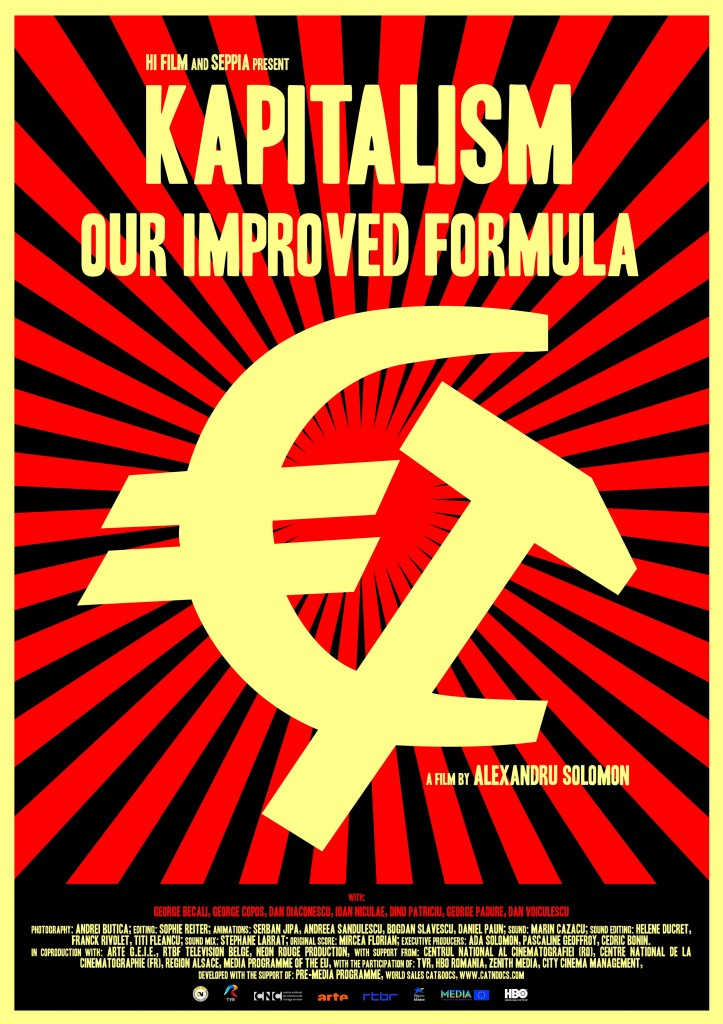
  • Recomand Kapitalism – Rețeta noastră secretă, un documentar excelent, varianta românească a filmului Inside Job! Un film chirurgical, care se inserează în măruntaiele putrede ale “modelelor de succes” din capitalismul românesc. Vorba lui Eugen Istodor, “nici măcar un capitalism ca lumea n-am putut face!”

    Întotdeauna am crezut că un om cu adevărat deștept, un capitalist pur sânge este unul care creează, inovează, așa cum este Radu Georgescu, de exemplu. De cealaltă parte, cu riscul de a forța puțin nota, cred că diferența din Patriciu și Becali e doar de PR/brand personal, amândoi fiind speculatori, “descurcăreți”, șmecheri care au știut să speculeze, să mituiască, să fenteze, fără să creeze/inoveze efectiv nimic nou (specularea bursei, informațiile favorizante, bișnița, mituirea și bunele relații cu personaje din aparatul politico-administrativ, toate acestea evidențiază cât se poate de clar de ce marile afaceri din România se fac cu statul). Plus valoarea nu are mediul proprice în comportamentul balcanic, al peticelii și târguielii de mahala, grețos de relativist moral, etc., oricât de machiat estetic ar fi el.

    Din păcate, de ani buni trăim o ironie cinică: spuma capitalismului românesc e formată din elita comunistă de odinioară. Oricum ai învârti-o, blestemul ciumei roșii a știut perfect să se îmbrace în hainele unui capitalism hard, feroce. Așa cum mai spus-o cu altă ocazie, e clar că capitalismul relevă limitele naturii umane, în timp ce socialismul le maschează prin prefecătoria schimbării ei. Avem de ales între două rele, dar eu, cel puțin, prefer pe cel care este ușor de demascat și care suportă critica, respingând categoric avatarul unei utopii înrudite cu teroarea.

    Pe site-ul de promovare al filmului, kapitalism.ro, găsiți câteva pastile de kapitalism:

    1. Din culisele “Kapitalismului...”

    2. Despre cei care au refuzat să apară în “Kapitalism…”

    3. “Kapitalism”, moguli și criză

    4. Banii lui Ceaușescu și tăcerea “de aur“

    5. La filmare cu mogulii

    6. Așteptându-i pe miliardari

    7. Becali și artele frumoase

    8. Bântuiți de Nicolae Ceaușescu

    9. Capitalismul, cuibărit în Palatul R.S.R.

    10. Nopțile de la OTV

    11. Capitalismul, văzut din cer

    Enjoy it!

  • Oi Va Voi – Refugee

    You ask me,
    Why it is I come to you,
    when someone else is just as good.
    I asked them but they said the same,
    Didn’t even ask my name.

    Explain to me
    Just what it is you have to lose
    Take a minute in my shoes
    Don’t it feel like you’ve paid your dues already

    I’ll show you,
    That all our fates are so entwined
    don’t lose your faith in humankind
    Just don’t forget my state of mind
    is fragile.

    Together,
    we can enjoy the taste of dignity
    As long as you believe in me
    I’ll show you my reality
    I’ve seen a few.

    You ask me,
    Why it is I come to you,
    when someone else is just as good.
    I asked them but they said the same,
    Didn’t even ask my name.

    Another refugee.