
• The Transhumanist God

    Instead of praying for transcendence let’s engineer transcendence. Let’s engineer ourselves into blissful utopian existence. “We are as gods and might as well get good at it”. (YouTube description)

    “Unfortunately, the singularity may not be what you’re hoping for. By default the singularity (intelligence explosion) will go very badly for humans… so by default superhuman AIs will end up optimizing the world around us for something other than what we want, and using up all our resources to do so.“ (Reddit’s CEO Luke Muehlhauser)

    The sciences, good and innocent in themselves, had even in Ransom’s own time begun to be subtly maneuvered in a certain direction. Despair of objective truth had been increasingly insinuated into the scientists, indifference to it, and a concentration upon power had been the result. Babble about the élan vital and flirtations with pan-psychism were bidding fair to restore the Anima Mundi of the magicians. Dreams of the far future destiny of man were dragging up from its shallow and unquiet grave, the old dream of Man as God. The very experiences of the pathological laboratory were breeding a conviction that the stifling of deep set repugnances was the first essential for progress. And now all this had reached the stage at which its dark contrivers thought they could safely begin to bend it back so that it would meet that other and earlier kind of power.

    Indeed, they were choosing the first moment at which this could have been done. You could not have done it with nineteenth-century scientists. Their firm objective materialism would have excluded it from their minds; and their inherited morality would have kept them from touching dirt. MacPhee was a survivor from that tradition. It was different now. Perhaps few or none at Belbury knew what was happening: but once it happened, they would be like straw in fire. What should they find incredible, since they believed no longer in a rational universe? What should they regard as too obscene, since they held that all morality was a mere subjective by-product of the physical and economic situations of men? From the point of view which is accepted in hell, the whole history of our Earth had led to this moment. There was now at last a real chance for fallen Man to shake off that limitation of his powers which mercy had imposed upon him as a protection from the full results of his fall. If this succeeded, hell would be at last incarnate. (C. S. Lewis, That Hideous Strength, Scribner, 2003, p. 203)

    They (Nazism and Communism, my note, M.C.) are at war with nature. Human nature. This is the root of totalitarianism! Nazism is an ideology based on counterfeit biology, while communism is based on counterfeit sociology , although both systems claim to have scientific basis”. (Fr. Thom in The Soviet Story)

    Now the whole world had one language and a common speech. 2 As people moved eastward, they found a plain in Shinar and settled there. 3 They said to each other,

    “Come, let’s make bricks and bake them thoroughly.”

    They used brick instead of stone, and tar for mortar. 4 Then they said,

    “Come, let us build ourselves a city, with a tower that reaches to the heavens, so that we may make a name for ourselves; otherwise we will be scattered over the face of the whole earth.”

    5 But the Lord came down to see the city and the tower the people were building. 6 The Lord said,

    “If as one people speaking the same language they have begun to do this, then nothing they plan to do will be impossible for them. 7 Come, let us go down and confuse their language so they will not understand each other.”

    8 So the Lord scattered them from there over all the earth, and they stopped building the city. 9 That is why it was called Babel—because there the Lord confused the language of the whole world. From there the Lord scattered them over the face of the whole earth. (Genesis 11:1-9)

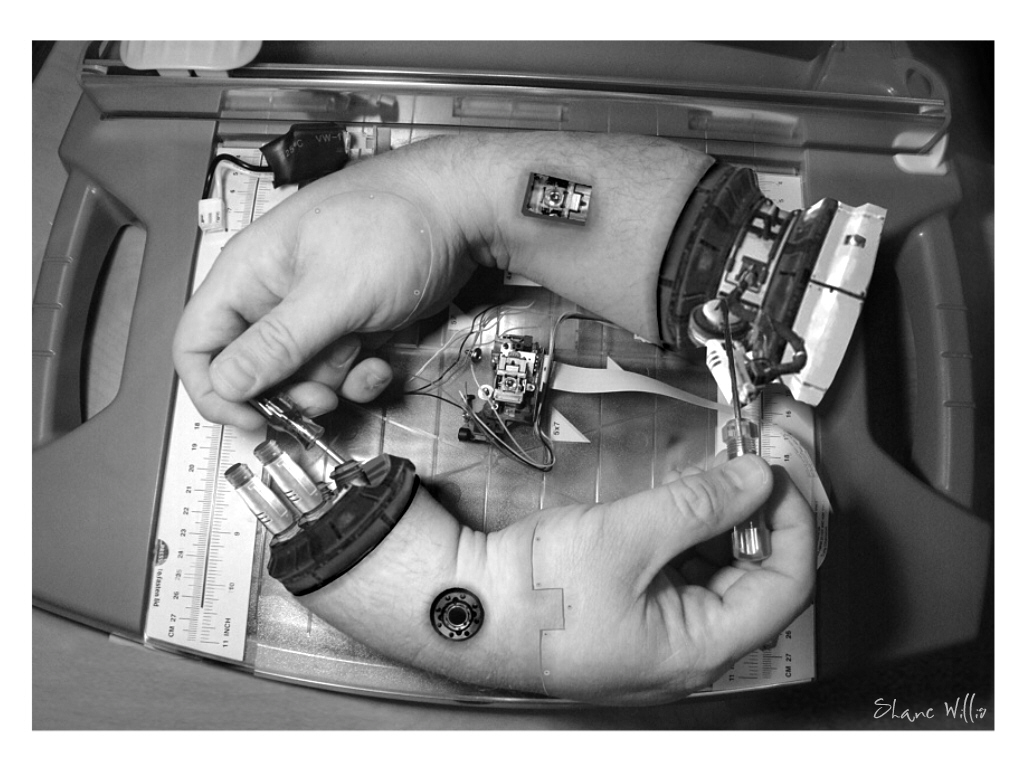
    Hand Fixing Hand by Shane Willis
  • “Social Justice” is just “diversity” and “multiculturalism” renamed. The emphasis on “social justice’ concept is a propaganda’ way to look pretty and intelligent at the same time, like candidates for Miss World. When everyone is considered a center, then everyone is in reality marginalized! We are now very in-loved by our “social justice”, in fact this is a revenge of different “marginalized” groups over the “white, capitalists, Protestant, Euro-centric, homophobic, misogynistic and authoritative” majority of those who had power (yes, Marx is the “prophet” of our days!). We have “to liberate from the repressive power structures of the past” through the strategies of the new “soft” power! In doing these the new propaganda works very well in our times. The leftist authors make a lot of  selection of truth, demonization, scapegoating, retelling history, censorship of ideas, words, authors, etc.

    I really think that the critique of absolutist ideologies has to be accompanied with the critique of contemporary relativism. It is very interesting how some very relativistic persons are so convinced by their multicultural values! The question is if they can imagine the values of tolerance, respect, dignity, and freedom exclusively based on the “marginalized cultures”. I really doubt about this. How will be a society built on the values of gay “community”? By the way, how is possible that a society obsessed with the concept of difference, the other as another differently, sees homosexuality, the love of each other as similar, as very “natural”? Or we can see a society built on the values of those who support abortion? Or we can teach our children something about acceptance and respect when we see a lot of slogans about women’s’ superiority (if misandry is good, then why misogyny is wrong?)? For some discussions about this read not only the “official” feminist literature, but also The Second Sexism: Discrimination Against Men and Boys wrote by David Benatar.

    Coming from a society that lived a very high level of state control on almost every aspect of daily life, even in private life, I have to confess my skepticism about the state paternalism and about the government’s right to define morality. Every totalitarian state wants to become the father and the mother of nations!

    It is good to have some common ideals like equity, equality, peace, freedom. But also it is important to keep a sense of reality. We live in a society that is still unjust. We can decrease some injustices, but we have to be careful with what cost we are doing this “social justice”. It is not possible to fulfill the concept of “equality” and “freedom” at the same time. We have to consider one over another! If discourses are parallel, equal in significance, then these discourses are without any purpose and value because it cannot be evaluated. Where there is no competition, error and correction, advancement is not possible! This is a sign of utopian thought! And we know from history how many suffers caused this utopian philosophy.

    The future is not a completely new beginning; it is a sum of the present time!  And we cannot change the whole society into a better world if the individual is not changing for the  better. I found here another contradiction of “social justice”: we consider the Marxist and the Nietzsche’s concepts of power and class struggle as the inner motivation for the past injustices, but we consider ourselves immune to these. We have to consider the limits of the human nature. Otherwise we will live in a perfect hypocrisy of self-esteem slogans deconstructed by the statistics and horrific facts of daily news on TV.

    Heaven is not here, but we can build a real hell in searching of this heaven! 

  • (Pseudo)elegie

    Dacă [în București] ”mi-am plimbat isteria și singuratatea” (M. Cărtărescu, Pururi tânăr, înfășurat în pixeli), cum ar fi să ne imaginăm un loc asemenea sătucului sud-american Macondo, construit de Garcia Marquez în Un veac de singurătate, loc în care timpul nu se epuizează ci se repetă ciclic? Condiția acestei bucurii a vieții este solitudinea, izolarea de vacarmul roților progresului care calcă în picioare lumi reale și imaginare. Mintea (post)modernului pare a-și găsi un drog facil în refugierea sub pielea ”bunului sălbatic” pentru a descoperi bucuria umanului simplu, sincer, imortal.

    Să uiți valoarea cuvintelor scrise pentru că inima își trăiește acum visele prin vorbe înțelese instant…, să te bucuri de complicități nevinovate, jucăușe …, să plutești agale în universul cotidianității dragostei…, ce promisiuni frumoase ne oferă o astfel de lume a solitudinii!

    Este adevărat că am devenit prea mult artizani fără memorie, negustori de semnificații pe care uităm a le trăi, captivi ai orașelor pline de oglinzi. Dar din păcate o lume ca cea imaginată de Garcia Marquez nu ne scapă de demonii interiori, de nesăbuințele noastre oricât de bine le-am ”justifica”. Cred că mintea noastră e foarte pricepută în a-și fabrica scuze pentru ca apoi să-și găsească culcușuri utopice, ale unui realism magic ornat cu finețuri literar-artistice.

    Și totuși, umbra a ceea ce suntem ne urmărește până și cele mai ascunse unghere în care ne refugiem cu imaginația noastră atunci când citim cărți, ascultăm muzică sau vizionăm filme.

    Odată, demult în istorie, după ce lumea a fost curățață prin potop, familia de oameni care supraviețuiseră judecății divine găsi un pământ nou. Au uitat însă că inima lor era parte a pământului rău, singura bucată care mai rămaseră. Nu mult trecură și sub pojghița de aparentă solitudine catarhică avea să iasă la iveală (din nou) mugurii păcatului. Oare un veac de singurătate ar fi fost prea mult sau prea puțin pentru ca Noe și urmașii lui să mai primească o a doua șansă?

    Before  reaching  the  final  line,  however,  he  had  already  understood that he would never leave that room, for it was foreseen that  the  city  of  mirrors  (or  mirages)  would  be  wiped  out  by the  wind  and  exiled from the memory of men at the precise moment when Aureliano Babilonia  would  finish  deciphering  the parchments, and that everything  written  on them was unrepeatable since time immemorial and  forever  more, because races condemned to one hundred years of solitude did not  have a second opportunity on earth.
    THE END.

    (Garcia Marquez, One Hundred Years of Solitude, Harper, 2006, p. 417)

    Oare ce trăiri ne străbat nervii atunci când ajungem la acel ”The End”? Oare totul s-a sfârșit? Totul a fost o simplă evaziune într-un imaginar călduț, dar în cele din urmă neputincios și urât de izolat, de singur, de departe față de noi? Să-și fi găsit cuvântul scris moartea în tăcerea noastră așternută pe coperta cărții citite?

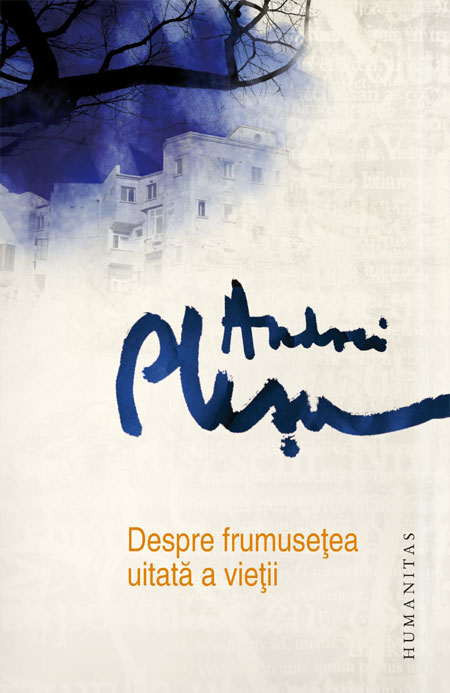
  • Se poate trăi. Se poate trăi bine. Se poate (încă) trăi frumos! (A. Pleșu)

    ”Sofisticarea” civilizată a adus cu sine, simultan, fragilitate fizică și debilitate mintală. Suntem ”evoluați” și precari. E frapantă, de pildă, dispariția aproape totală din orizontul interogației și al reflexiei noastre a unor teme esențiale. Iubirea nu mai este astăzi un subiect, dincolo de scandalul monden, inflamația erotică și sentimentalismul de telenovelă (…) Absente, în sens substanțial, de pe piață sunt și teme ca prietenia, umorul, destinul și moartea.” (Andrei Pleșu, Despre frumusețea uitată a vieții, Humanitas, București, 2011, p. 8-9)