
• We shape our tools, and there after they shape us. (John M. Culkin)

    I’ve read The Shallows: What the Internet Is Doing to Our Brains by Nicholas Carr (W. W. Norton & Company, 2011) and I remembered Plato. In Phaedrus’s dialogue (sect. 274-275), Plato presents a story about the invention of letters by Thoth. This new skill is a gift, a “pharmakon” (in ancient Greek “pharmakon” have two opposite meanings, depending of proportion/usage: “medicament”, but also “poison”). The external memory/writing

    […] it “will create forgetfulness in the learners’ souls, because they will not use their memories; they will trust to the external written characters and not remember of themselves.”

    Nicholas Carr talks a lot about how using Internet can affect our cognitive skills, some of them being boosted, while others are atrophied. It is not about technophilia or technophobia. We must accept that in any gift we receive, there is something we lose.

    When we extend some part of ourselves artificially, we also distance ourselves from the amplified part and its natural functions. (p. 211)

    “I can’t read War and Peace anymore, I’ve lost the ability to do that. Even a blog post of more than three or four paragraphs is too much to absorb. I skim it.” (page 8)

    As McLuhan suggested, media aren’t just channels of information. They supply the stuff of thought, but they also shape the process of thought. And the Net seems to be doing is chipping away my capacity for concentration and contemplation. Whether I’m online or not, my mind now expects to take in information the way the Net distributes it. (page 7)

    Progressive educators banished the practice [of memorization] from classrooms, dismissing it as a vestige of a less enlightened time. What had long been viewed as stimulus for personal insight and creativity came to be seen as a barrier to imagination and then simply as a waste of mental energy. (page 180)

    The influx of competing messages that we receive whenever we go online not only overloads our working memory; it makes it much harder for our frontal lobes to concentrate our attention on any one thing. The process of memory consolidation can’t even get started. And, thanks once again to the plasticity of our neuronal pathways, the more we use the Web, the more we train our brain to be distracted – to process information very quickly and very efficiently but without sustained attention. That helps explain why many of us find it hard to concentrate even we’re away from our computers. (p. 194)

    The computerized grading system would “read and assess” the essays that British students write as part of a widely used test of language proficiency. A spokesman for Edexcel, which is a subsidiary of the media conglomerate Pearson, explained that the system “produced the accuracy of human markers while eliminating human elements such as tiredness and subjectivity,” according to a report in the Times Education Supplement. A testing expert told the appear that the computerized evaluation of essays would be a mainstay of education in the future: “The uncertainty is ‘when’ not ‘if’.” How, I wondered, would the Edexcel software discern those rare students who break from the conventions of writing not because they’re incompetent but because they have a special spark of brilliance? I knew the answer: it wouldn’t  Computers, as Joseph Weizenbaum pointed out, follow rules: they don’t make judgments. In place of subjectivity, they give us formula. The story revealed just how prescient Weizenbaum had been when, decades ago, he warned that as we grow more accustomed to and dependent on our computers we will be tempted to entrust to them “tasks that demand wisdom.” And once we do that, there will be no turning back. The software will become indispensable to those tasks. (p. 223-224)

    The-Shallows


    Here comes the other opinion:

  • Does anyone of us think that the expression Fear is a tool to control the masses refers only to Inquisition/Christian Church, Fascism, etc.? Well, be nonconformist and think again! As happened in history, the jokers of freedom are excellent executioners! And media is now used as an excellent camouflage of fear under very permissive labels.

    If we ask ourselves how it is that the advocacy of gay marriage has become an orthodoxy to which all our political leaders subscribe, we must surely acknowledge that intimidation has some part to play in the matter. Express the slightest hesitation on this score and someone will accuse you of “homophobia”, while others will organize to ensure that, even if nothing else is known about your views, this at least will be notorious. Only someone with nothing to lose can venture to discuss the issue with the measure of circumspection that it invites, and politicians do not figure among the class of people with nothing to lose.

    Yet it is unlikely that the ordinary conscience will find itself entirely at ease with a change that overthrows social norms on which people have depended throughout recorded history. In this, as in so many things, people of conservative temperament look around for the person who will speak for them and find only an embarrassed silence. Strident minorities, acting on the growing disposition to censor their opponents, ensure that the deeper the question, the more likely it is to be settled by shallow arguments. (Roger Scruton, “Don’t sacrifice marriage on equality’s altar”, The Times, 15 December 2012)

    silent

    More about “spiral of silence” HERE.

  • A Short History of My Town

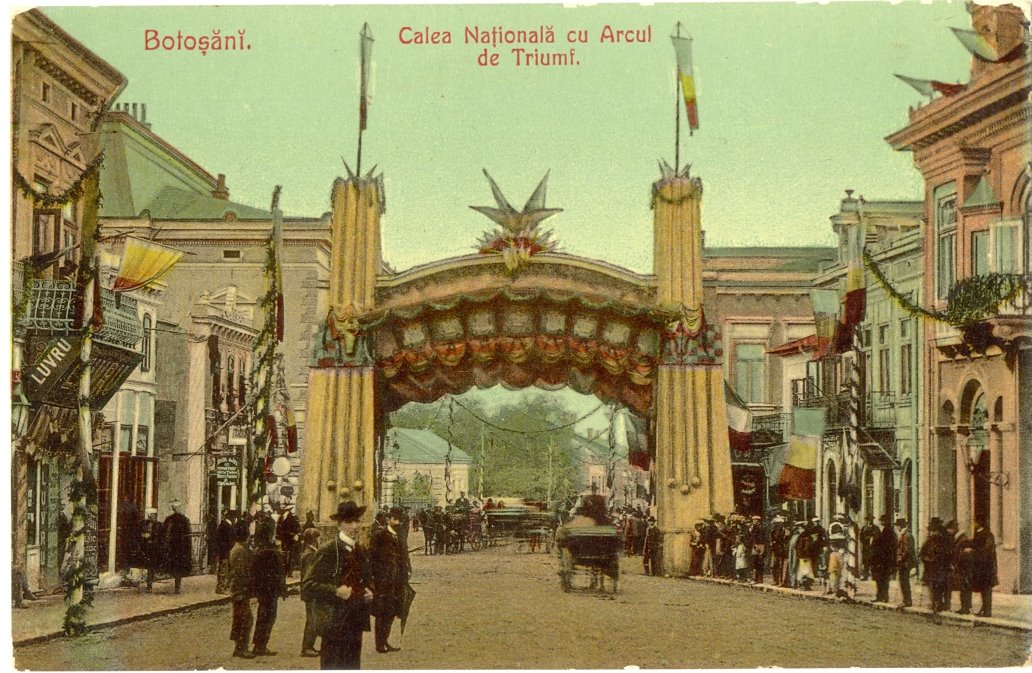
    Arcul_de_triumf_Botoşani

    The Old Arch, Botosani, Romania (source: Despre Botosani)

    “Boasting a rich cultural life, the city of Botoşani has long produced major personalities in the science and culture. Botoşani natives like Mihai Eminescu, Nicolae Iorga, Stefan Luchian, and Octav Onicescu have become major figures in diverse disciplines, and many have distinct claims to relevance not just within Romania, but on a worldwide level.”

    (What does irritate me in this video is the propagandist tone of the film that flatters local government efforts. Let’s get real: there are more things need to be done for this city to become what Botosani was once.)

    Unfortunately, the history of this place has a sad tradition to banish many of its sons.

    via vaisamar.

  • Despre onestitate

    Oare o mare sunt eu, sau un leviatan, de-ai pus strajă în jurul meu? (Iov 7:12)

    Atunci când treci prin anumite stări (normale când te afli la o răscruce în viață, când suferi, când pierzi ceva/cineva, când simți că plutești fără de sens prin viață, etc.) cărțile devin simple constelații haotice de litere, emisiunile TV sau filmele zumzăiesc undeva în background, chiar cei apropiați sunt distanți, incapabili a simți sensibilități atât de intime încât doar Dumnzezeu le poate înțelege. Dar, chiar și aici e o problemă: ”Cum să te cerți cu Dumnezeu? Cum să I te plângi? Nu face bine! Nu se cade! Nu e o stare nou-testamentară!” Reverența prefăcută a succesului spiritual sugrumă onestitatea care ne aduce aminte de locul nostru în univers! De altfel prefăcătoria creștinilor osificați într-o religie a succesului a fost motivul pentru care mulți scriitori și artiști au creat opere de calitate dar și apologia unei onestități fără niciun dumnezeu!

    Iată că trăim glorioasele vremuri ale ”autenticității” omului fără de Dumnezeu. Dar, surpriză, oriunde te uiți, la Tv, în cărțile de succes, pe fețele comerciale, ”socializate” pe toți pereții, vezi vigoare, zâmbet, plesneală de fericire. Vrând să fii ”autentic” ca ceilalți (iată o nouă definiție a modei), e musai să îți ștergi lacrima, să îți sorbi cuvintele din inimă și le arunci într-un tărâm al lucrurilor stricate, prăfuite, uitate. Îți iei sufletul, îl machiezi, și îi dai un șut în arena olimpienilor fără de moarte, tristețe, suferință. Și uite așa ne-am ales cu o ”autenticitate” care ne închide în aceeași cușcă ca și prefecătoria religioasă!

    Conștient că viața e o alchimie de stări diferite, eu cred că trebuie să reconsiderăm nevoia cât se poate de naturală de a te plânge, de a exprima durerile, de a căuta alinare, compasiune, urechi care să te audă, inimă care să te înțeleagă. Și, oricât de sensibili și bine intenționați am fi, să recunoaștem că Cel care a suflat suflare de viață ne poate înțelege cel mai bine suspinele sufletului (oare ce rost are să spui cuiva în suferință să aibă credință când acesta nu o are, de parcă i-am porunci să crească instant cu nu știu câți centimetri și acesta ar putea dar nu ar vrea? astfel de situații sunt prilejuri de confidențe îndrăznețe, dar pe care nu noi trebuie să le smulgem de la cei în nevoie!).

    HurtingwithGodRevisions2.pdf

    Un îndrumător pentru o reconsiderare a Psalmilor, ca material pedagogic pentru suspinele vieților noastre de astăzi, o constituie cartea lui Glenn Pemberton, Hurting with God: Learning to Lament with the Psalms  (Abilene Christian University Press, 2012).

    Psalmii conțin imprecații adresate lui Dumnezeu într-o proporție care ar zgârâia urechile finuțe ale multor creștini ce își doresc aici, pe pământ, o viață de catifea. Din 150 de Psalmi, 60 de Psalmi, adică 40%, sunt Psalmi de imprecație, 41 (adică 28%) de laudă, 27 (18%) de mulțumire și 22 (14%) intră la categoria ”diverse”. Oricât am teologhisi că de fapt creștinul trăiește vremurile harului, ale Duhului Sfânt lăsat ca Mângâietor pe pământ, neglijând Psalmii nu facem altceva decât să ne privăm de o resursă extraordinară de a empatiza, de a ne exprima adâncurile pe care nu apucăm să le sondăm nici când mergem la psiholog/consilier.

    If we are what we sing, then we are in trouble in terms of expressing the reality of the life of faith (Denise Dombrowski Hopkins, Journey  through the Psalms, Chalice Press, 2002, p. 8)

    Dacă se face o comparație a structurii Psalmilor cu cea a cărților de cântări din bisericile protestante tradiționale, diferențele se văd cât se poate de clar:

    Slide1

    Situația devine critică dacă comparația este făcută între Psalmi și Praise & Worship. Muzica de marș forțat pe ritmuri de fanfară a fost înlocuită cu o muzică psihedelică care să ne țină tinerii în biserică, hiper lacrimogenă, înălțătoare ca o rachetă și durabilă ca o secundă…

    Suntem învățați să avem o viață tot mai predictibilă, care urmează rețete numerice ale unor algoritme calculate riguros de nelipsiții specialiști, ajungând  roboței sterilizați de îndoieli, temeri, întrebări, emoții și rugăminți.

    În fața unei astfel de alterări a umanității noastre, a unei artificialități sufocante, Psalmii sunt o invitație la onestitate, la tragerea vălului de peste sufletul nostru, îmbâcsit de prea multe parfumuri stridente. Ei sunt popasuri pentru conversații autentice cu Dumnezeu despre sine (și despre alții), ajutându-ne să trecem peste furtuni și talazuri care par a ne înghiți cu totul. De altfel este foarte interesantă observația pe care o face autorul despre metafora mării ca fiind una care determină/afectează viața omului sau una care e o imagine a condiției umane. Chiar dacă este pusă în granițe stabilite de Dumnezeu (Ps. 104) totuși apele mării sunt o amenințare, un simbol al distrugerii (Geneza 6, Ps. 69, 88, 144, etc.), al judecății, al răului cu care se confruntă omul. Psalmistul este cel care  adresează lamentările despre pericolele care îi amenință viața, cerându-i lui Dumnezeu să-l salveze din mijlocul acelor probleme, iar în cele din urmă își exprimă încrederea în Dumnezeu ca Cel care orânduiește creația Sa, o administrează și o stăpânește (Ps. 29, 77). În cele din urmă  vom avea ”un cer nou şi un pământ nou; pentru că cerul dintâi şi pământul dintâi pieriseră şi marea nu mai era” (Apoc. 21:1). Abia acolo nu va fi lacrimă și plânset! Iată cum plânsetele vor fi  transformate în dans de bucurie!

    Așadar, să nu ne fie frică să fim umani, autentici, onești!