


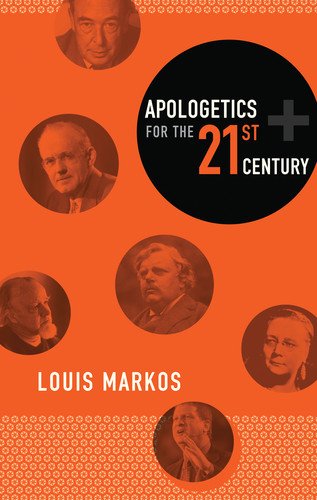
I have found a new and very attractive book: Apologetics for the Twenty-First Century by Louis Markos (Crossway, 2010). In the following you can read the editor’s presentation. Moreover, you may click the LINK to view some pages from this book.
The notion that Christianity makes sense and also has the power to explain the truth about the nature of God, man, and the universe is largely out of sync with the ideology of the culture outside the church walls. That’s nothing new. Apologists have been defending and explaining the faith since the beginning of Christianity. However, in each age, a new generation is responsible for articulating our reason for the faith.
In Apologetics for the Twenty-First Century (October 2010), Louis Markos discusses the explosion of apologetics in response to secular Enlightenment modernism and lays out the groundwork for careful apologetics today.
He divides the book into two main parts:
- The Legacy of Lewis and Chesterton: Markos makes the case that C.S. Lewis was the biggest contributor to Christian apologetics in the 21st century. In these chapters, he crafts a survey of Lewis’ major apologetic works and arguments. He also explores the work of G.K. Chesterton, who’s work had a major influence on Lewis.
- Making the Case for Faith in a (post) Modern World: In the second half of the book, Markos addresses broader apologetic themes and arguments. He examines apologetic arguments from logic, science, and regarding the problem of pain. He also reiterates the authority of scripture and explores the most recent developments in apologetics, including comparisons with those of other religions.
Readers will walk away from this book better able to articulate and defend Christianity in a world of competing views. Learn more about Apologetics for the Twenty-First Century.



Leave a comment